More About This Card
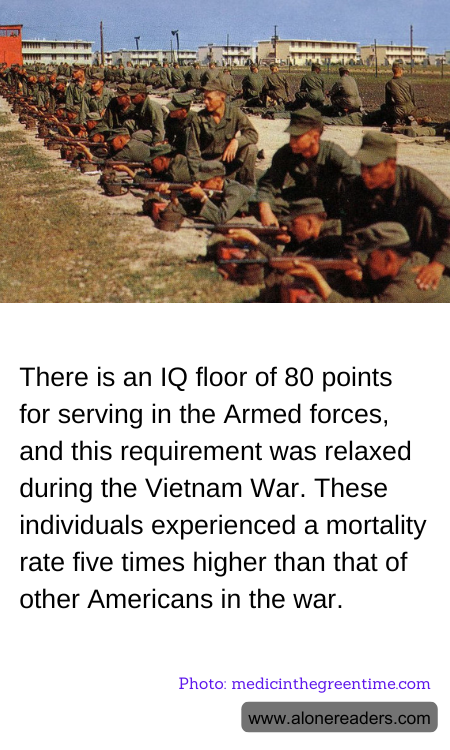
The Vietnam War, a conflict that spanned nearly two decades, was a period marked by intense controversy and profound human cost. Among the many facets of this war was the unique approach to military recruitment, particularly the relaxation of the Armed Forces' standard IQ requirement. Traditionally, the U.S. military has maintained an IQ floor of 80 points for enlistment, a threshold intended to ensure that recruits possess the cognitive abilities necessary for the demands of military service. However, during the Vietnam War, this requirement was temporarily relaxed, leading to significant and tragic consequences.
The decision to lower the IQ threshold was driven by the urgent need for manpower as the war escalated. The draft system, which was already under immense pressure, sought to fill the ranks with more soldiers, leading to the acceptance of individuals who would not typically qualify under standard enlistment criteria. This policy shift, while addressing immediate personnel shortages, had far-reaching implications for those who were recruited under these relaxed standards.
Individuals with IQs below the traditional threshold faced numerous challenges in the military environment. The complexities of modern warfare demand not only physical endurance but also the ability to process information quickly, make strategic decisions, and adapt to rapidly changing situations. Those with lower cognitive abilities often struggled with these demands, which could lead to increased vulnerability in combat situations.
Tragically, the mortality rate among these recruits was significantly higher than that of their peers. Statistics from the Vietnam War indicate that individuals who were enlisted with lower IQ scores experienced a mortality rate five times higher than that of other American soldiers. This stark disparity underscores the critical importance of cognitive readiness in military service and highlights the severe consequences of relaxing such standards.
The decision to lower the IQ requirement during the Vietnam War serves as a poignant reminder of the complexities involved in military recruitment and the ethical considerations that must be balanced against operational needs. While the immediate goal was to bolster troop numbers, the long-term impact on those who served under these relaxed standards was profound and, in many cases, devastating.
As we reflect on this period in history, it is crucial to acknowledge the sacrifices made by all who served, regardless of the circumstances of their enlistment. The lessons learned from the Vietnam War continue to inform military policies today, emphasizing the need for careful consideration of recruitment standards to ensure the safety and effectiveness of those who serve. The legacy of these decisions serves as a testament to the importance of maintaining rigorous standards in the face of challenging circumstances, ensuring that all service members are equipped to meet the demands of their roles.