More About This Card
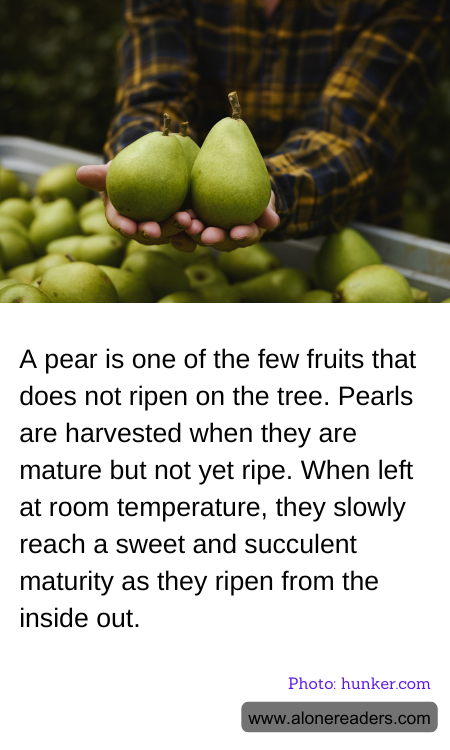
The pear is a unique fruit that stands out in the world of horticulture due to its distinctive ripening process. Unlike many fruits that reach their peak of ripeness while still attached to the tree, pears are harvested when they are mature but not yet ripe. This intriguing characteristic is not just a quirk of nature but a carefully orchestrated process that ensures the fruit reaches its full potential in terms of flavor and texture.
When pears are picked from the tree, they are firm and not yet ready to eat. This is because pears ripen from the inside out, a process that continues after they have been harvested. If left to ripen on the tree, pears often become overripe at the core while the outer flesh remains hard and unpalatable. By harvesting them at the right moment of maturity, growers can ensure that pears will ripen evenly and develop their signature sweet and juicy flavor.
Once harvested, pears are best left at room temperature to allow the ripening process to unfold naturally. This gradual transition from firm to tender is a fascinating transformation, as the fruit's starches convert into sugars, enhancing its sweetness and aroma. The skin of the pear may change color slightly, but the true magic happens beneath the surface, where the flesh becomes succulent and buttery.
This method of ripening not only preserves the quality of the fruit but also extends its shelf life, allowing consumers to enjoy pears at their peak of perfection. It is a testament to the delicate balance of nature and human intervention, where timing and patience play crucial roles in delivering a fruit that is both delicious and nutritious.
Pears are a versatile fruit, enjoyed fresh, poached, baked, or even grilled. Their subtle sweetness and smooth texture make them a favorite in both sweet and savory dishes. Whether added to a salad, paired with cheese, or simply eaten on their own, pears offer a delightful eating experience that is both refreshing and satisfying.
In conclusion, the pear's unique ripening process is a marvel of nature that highlights the importance of understanding and respecting the life cycle of fruits. By allowing pears to ripen off the tree, we are rewarded with a fruit that is not only delicious but also a testament to the wonders of natural maturation. This process ensures that each bite of a pear is a celebration of flavor, texture, and the careful balance of nature's timing.