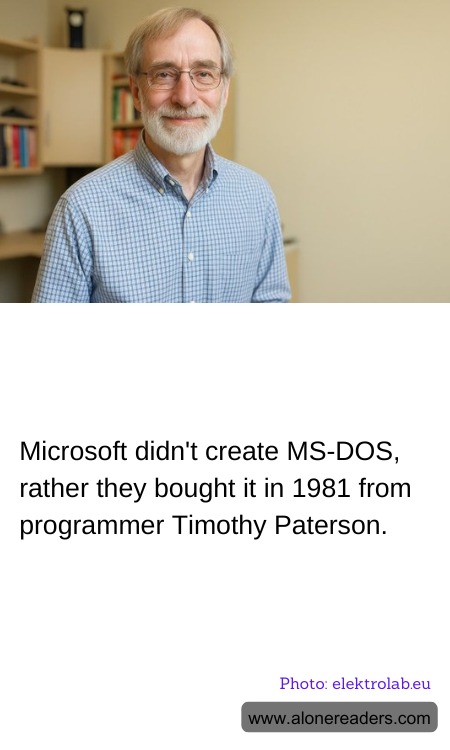
In the annals of computing history, Microsoft is often credited with the creation of MS-DOS, the operating system that played a pivotal role in the personal computer revolution of the 1980s. However, the true origins of MS-DOS are rooted in a lesser-known story involving a small software company and a talented programmer named Timothy Paterson.
In the late 1970s, IBM was on the verge of entering the burgeoning personal computer market. To do so, they needed an operating system that could run on their new line of personal computers. At the time, Digital Research's CP/M was the dominant operating system for microcomputers, but negotiations between IBM and Digital Research fell through. This left IBM in search of an alternative, and they turned to Microsoft, a young company known primarily for its programming languages.
Microsoft, led by Bill Gates and Paul Allen, saw an opportunity but faced a significant challenge: they did not have an operating system to offer IBM. Enter Seattle Computer Products (SCP), a small company where Timothy Paterson worked as a programmer. Paterson had developed an operating system called QDOS, which stood for "Quick and Dirty Operating System." QDOS was designed to be compatible with CP/M and was created to run on SCP's hardware.
Recognizing the potential of QDOS, Microsoft negotiated a deal with SCP to purchase the rights to the operating system. In July 1981, Microsoft acquired QDOS for a reported $50,000. After acquiring the software, Microsoft made several modifications and rebranded it as MS-DOS (Microsoft Disk Operating System). This newly minted MS-DOS became the operating system that IBM bundled with its first personal computer, the IBM PC, launched in August 1981.
The acquisition of QDOS and its transformation into MS-DOS was a strategic masterstroke for Microsoft. It allowed the company to establish a foothold in the rapidly growing personal computer market. MS-DOS quickly became the standard operating system for IBM-compatible PCs, and its widespread adoption helped propel Microsoft to the forefront of the software industry.
Timothy Paterson's role in the creation of MS-DOS is a testament to the often-overlooked contributions of individual programmers in the tech industry. While Microsoft went on to become a global technology giant, Paterson's work laid the foundation for one of the most significant developments in computing history. His story serves as a reminder of the collaborative nature of technological innovation and the importance of recognizing the contributions of all those involved in shaping the digital world we know today.
