More About This Card
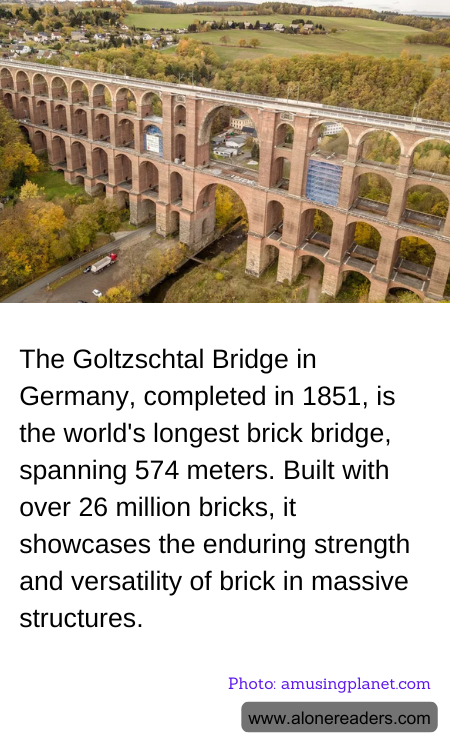
Nestled in the picturesque landscape of Saxony, Germany, the Goltzschtal Bridge stands as a testament to the ingenuity and craftsmanship of 19th-century engineering. Completed in 1851, this architectural marvel holds the distinction of being the world's longest brick bridge, stretching an impressive 574 meters across the Goltzsch Valley. Its construction, which involved the meticulous placement of over 26 million bricks, showcases the enduring strength and versatility of brick as a building material, even in massive structures.
The Goltzschtal Bridge was conceived during a time when the Industrial Revolution was transforming Europe, and the need for efficient transportation networks was paramount. The bridge was designed to facilitate the expansion of the railway system, connecting Saxony with Bavaria, and thus playing a crucial role in the economic development of the region. The choice of brick as the primary material was both practical and symbolic, reflecting the abundance of clay in the area and the skilled craftsmanship of local brickmakers.
Constructing such a colossal structure was no small feat. The project, led by engineer Johann Andreas Schubert, required innovative techniques and meticulous planning. The bridge's design features four tiers of arches, with the largest spanning 30.9 meters, a remarkable achievement for its time. The use of brick not only provided the necessary strength and durability but also allowed for a level of aesthetic detail that enhances the bridge's visual appeal. The warm, earthy tones of the bricks blend harmoniously with the surrounding landscape, creating a structure that is both functional and beautiful.
Over the years, the Goltzschtal Bridge has withstood the test of time, enduring the wear and tear of daily use and the ravages of two world wars. Its resilience is a testament to the quality of its construction and the inherent durability of brick as a building material. Today, the bridge continues to serve as a vital transportation link, carrying both rail and pedestrian traffic, while also attracting tourists and history enthusiasts from around the world.
The Goltzschtal Bridge is more than just a feat of engineering; it is a symbol of human perseverance and creativity. It stands as a reminder of the potential of traditional materials like brick to create structures that are not only functional but also enduring and beautiful. As we continue to push the boundaries of architectural design, the Goltzschtal Bridge serves as an inspiring example of how the past can inform and enrich our future endeavors. Whether viewed from afar or walked upon, this magnificent bridge remains a proud emblem of Germany's rich architectural heritage.