More About This Card
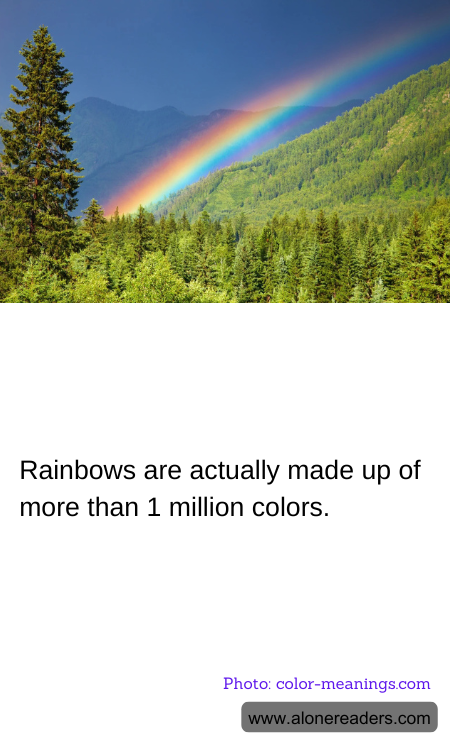
Rainbows have long fascinated humanity with their ethereal beauty and vibrant display of colors. Often depicted as a simple arc of seven distinct colors—red, orange, yellow, green, blue, indigo, and violet—rainbows are actually far more complex than they appear. In reality, a rainbow is composed of a continuous spectrum of colors, numbering over a million, that blend seamlessly into one another.
The formation of a rainbow is a natural optical phenomenon that occurs when sunlight is refracted, or bent, as it enters a raindrop. This light is then reflected off the inside surface of the droplet and refracted again as it exits. During this process, the light is dispersed into its constituent colors, creating a spectrum. While we traditionally identify seven colors, the spectrum is continuous, meaning there are countless shades and hues that the human eye cannot easily distinguish.
The reason we perceive only a few colors is due to the limitations of human vision. Our eyes contain three types of color receptors, or cones, which are sensitive to red, green, and blue light. These cones work together to interpret the vast array of colors we see. However, they cannot differentiate between every single wavelength of light, which is why we see a simplified version of the rainbow. In truth, the spectrum contains a myriad of colors that blend into one another, creating an unbroken sequence of hues.
Scientific advancements have allowed us to better understand the complexity of rainbows. Spectrometers and other optical instruments can measure the precise wavelengths of light present in a rainbow, revealing the full extent of its color range. These tools have shown that what appears to be a simple band of colors is actually a rich tapestry of millions of shades, each subtly different from the next.
The idea that rainbows contain more than a million colors challenges our perception of the natural world and invites us to appreciate the intricacies of light and color. It serves as a reminder of the wonders that exist beyond our immediate perception and the beauty that lies in the details. For artists, scientists, and dreamers alike, the rainbow is a symbol of the infinite possibilities that nature holds.
In conclusion, while the rainbow may seem like a straightforward display of seven colors, it is, in fact, a complex phenomenon composed of over a million shades. This revelation not only enhances our appreciation for this natural spectacle but also underscores the limitations of human perception. As we continue to explore the mysteries of light and color, the rainbow remains a captivating reminder of the beauty and complexity of the world around us.