More About This Card
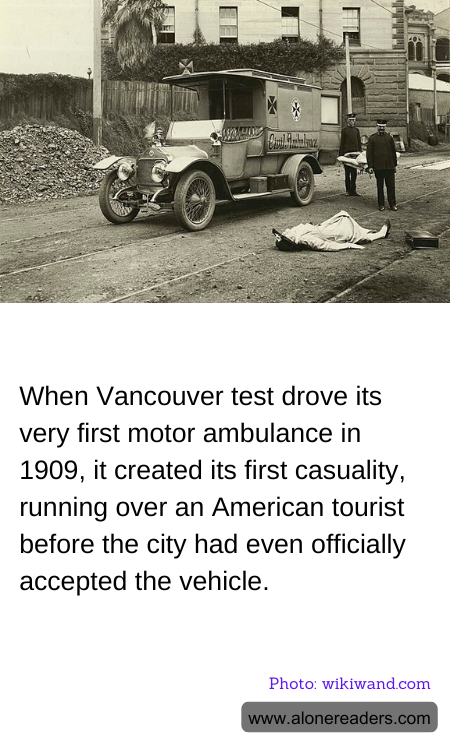
In the early 20th century, Vancouver was a burgeoning city, eager to embrace the technological advancements of the era. Among these innovations was the motor ambulance, a revolutionary vehicle that promised to transform emergency medical services. In 1909, Vancouver took a bold step forward by test-driving its very first motor ambulance. However, this historic moment was marred by an unfortunate incident that underscored the challenges of integrating new technology into everyday life.
The motor ambulance was a marvel of its time, designed to provide faster and more efficient transportation for those in need of urgent medical care. Prior to its introduction, horse-drawn carriages were the primary means of transporting the sick and injured, a method that was both slow and cumbersome. The motor ambulance promised to cut response times significantly, potentially saving countless lives. As the city prepared to adopt this new technology, excitement and anticipation filled the air.
However, the inaugural test drive of Vancouver's motor ambulance did not go as planned. During its trial run, the vehicle accidentally struck an American tourist, marking the city's first casualty involving the ambulance before it had even been officially accepted into service. This unfortunate incident highlighted the growing pains associated with the adoption of new technology, as well as the need for careful planning and training to ensure public safety.
The accident served as a sobering reminder of the potential risks that accompany technological progress. It underscored the importance of proper training for drivers and the need for clear protocols to prevent such mishaps in the future. Despite the setback, the incident did not deter Vancouver from moving forward with its plans to modernize its emergency services. Instead, it prompted city officials to take a more cautious approach, ensuring that all necessary precautions were in place before the motor ambulance became a permanent fixture in the city's fleet.
In the years that followed, the motor ambulance became an integral part of Vancouver's emergency response system, proving its worth by significantly improving the speed and efficiency of medical care. The initial accident, while tragic, served as a catalyst for change, prompting the city to refine its processes and prioritize safety. Today, the motor ambulance is a ubiquitous presence in cities around the world, a testament to the enduring impact of early pioneers who dared to embrace innovation despite the challenges.
The story of Vancouver's first motor ambulance is a poignant reminder of the complexities involved in adopting new technology. It highlights the delicate balance between progress and safety, a balance that continues to shape the development and implementation of new innovations today. As we look back on this moment in history, we are reminded of the importance of learning from past experiences to create a safer and more efficient future.