More About This Card
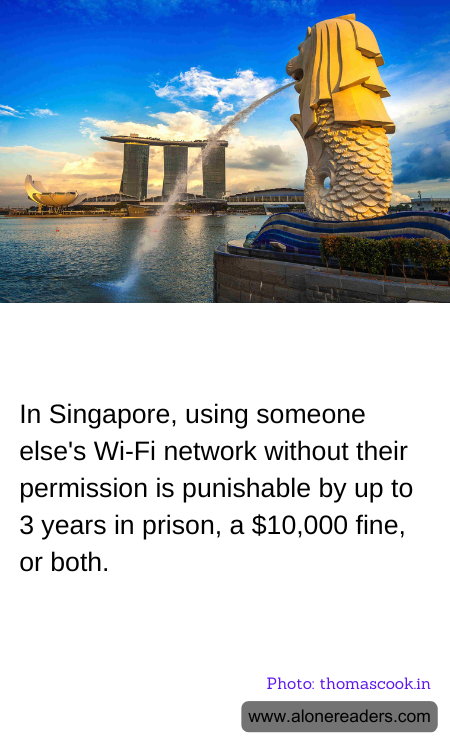
In Singapore, the unauthorized use of someone else's Wi-Fi network is not just a breach of etiquette but a serious legal offense. This stringent stance is rooted in the nation's commitment to maintaining cybersecurity and protecting personal privacy in an increasingly digital world. The Computer Misuse Act, which governs such offenses, underscores the importance of respecting digital boundaries by imposing severe penalties on those who infringe upon them.
The act of using another person's Wi-Fi without permission, often referred to as "Wi-Fi piggybacking," might seem harmless to some. However, it is considered a form of hacking under Singaporean law. The penalties for this offense are severe, with violators facing up to three years in prison, a fine of up to $10,000, or both. These harsh penalties reflect the government's zero-tolerance policy towards cybercrimes and its efforts to deter individuals from engaging in unauthorized access to computer systems.
The rationale behind such strict regulations is multifaceted. Firstly, unauthorized access to a Wi-Fi network can compromise the security of the network owner. It opens the door to potential data breaches, where sensitive information can be intercepted or stolen. Moreover, it can lead to bandwidth theft, slowing down the network for legitimate users and potentially incurring additional costs for the network owner. In more severe cases, the unauthorized user could engage in illegal activities online, which would be traced back to the network owner, causing legal and reputational harm.
Furthermore, Singapore's approach to Wi-Fi piggybacking is part of a broader strategy to cultivate a culture of cybersecurity awareness among its citizens. By imposing strict penalties, the government aims to educate the public about the importance of securing their networks and respecting the digital property of others. This is particularly crucial in a country that is rapidly advancing in its digital transformation, where the integrity and security of digital infrastructure are paramount.
For individuals in Singapore, this means taking proactive steps to secure their Wi-Fi networks, such as using strong passwords and regularly updating their security settings. It also means being aware of the legal implications of accessing networks without permission. For visitors and expatriates, understanding these laws is essential to avoid inadvertently committing a crime.
In conclusion, Singapore's legal framework regarding unauthorized Wi-Fi use serves as a stark reminder of the importance of cybersecurity and digital ethics. By treating Wi-Fi piggybacking as a serious offense, the country not only protects its citizens but also sets a precedent for responsible digital behavior. As the digital landscape continues to evolve, such measures are crucial in safeguarding the privacy and security of individuals and maintaining trust in digital systems.