More About This Card
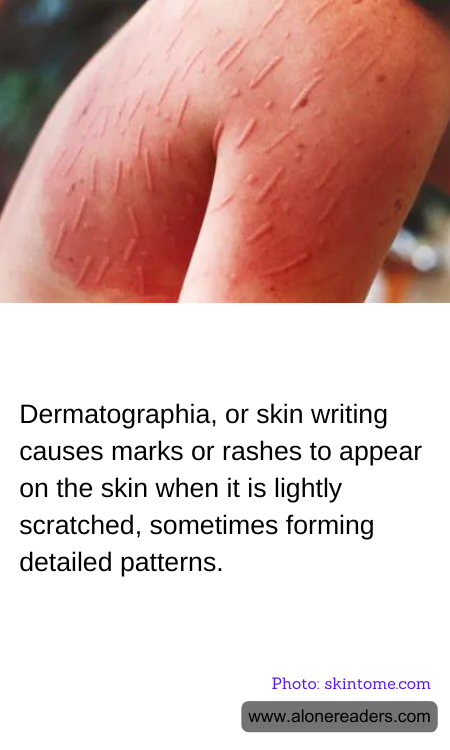
Dermatographia, often referred to as "skin writing," is a fascinating yet perplexing condition that affects the skin's response to minor physical stimuli. This condition is characterized by the appearance of raised, red marks or rashes on the skin when it is lightly scratched or rubbed. For some individuals, these marks can form intricate and detailed patterns, almost as if the skin itself is a canvas for temporary art.
The phenomenon occurs due to an exaggerated response by the skin's mast cells, which release histamines when the skin is scratched or irritated. This release causes the blood vessels to dilate and fluid to accumulate, resulting in the characteristic welts or hives. While the exact cause of dermatographia is not fully understood, it is believed to be linked to genetic factors, stress, or even environmental triggers. It is a relatively common condition, affecting approximately 2 to 5 percent of the population, and can occur at any age.
For most people with dermatographia, the condition is harmless and does not require medical treatment. The marks typically appear within minutes of the skin being scratched and can last anywhere from a few minutes to several hours before fading away. However, for some, the condition can be uncomfortable or even painful, especially if the skin becomes overly sensitive or itchy. In such cases, antihistamines or topical treatments may be recommended to alleviate symptoms.
Despite its benign nature, dermatographia can have a significant impact on those who experience it. The unpredictable nature of the condition can lead to self-consciousness or embarrassment, particularly if the marks appear in visible areas. However, many individuals with dermatographia have embraced their unique skin condition, using it as a form of self-expression. Some have even turned to social media to share their skin writing creations, transforming what might be seen as a flaw into a form of art.
Living with dermatographia requires a certain level of awareness and care. Those affected often learn to avoid triggers that may exacerbate their symptoms, such as tight clothing, harsh soaps, or extreme temperatures. Maintaining a gentle skincare routine and staying hydrated can also help manage the condition. Importantly, understanding and acceptance from friends and family can provide much-needed support, helping individuals with dermatographia feel more comfortable in their own skin.
In conclusion, dermatographia is a unique condition that highlights the incredible variability of human skin. While it may pose challenges for some, it also offers an opportunity for creativity and self-acceptance. By raising awareness and fostering understanding, we can ensure that those with dermatographia feel supported and empowered to embrace their distinctive skin.