More About This Card
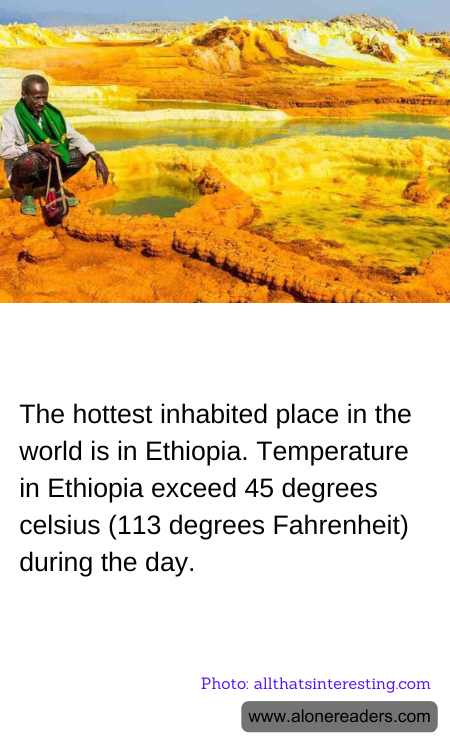
Nestled in the northeastern part of Ethiopia lies the Danakil Depression, a geological marvel that is often referred to as the hottest inhabited place on Earth. This extraordinary region is characterized by its extreme temperatures, which can soar above 45 degrees Celsius (113 degrees Fahrenheit) during the day, creating an environment that is as challenging as it is fascinating.
The Danakil Depression is part of the larger Afar Triangle, a geological depression that sits at the junction of three tectonic plates. This unique positioning has resulted in a landscape that is both otherworldly and inhospitable, with vast salt flats, active volcanoes, and colorful sulfur springs. Despite the harsh conditions, the region is home to the Afar people, a resilient community that has adapted to the extreme climate over generations. Their traditional way of life, which includes salt mining and pastoralism, offers a glimpse into how humans can thrive in even the most unforgiving environments.
The intense heat of the Danakil Depression is not the only remarkable feature of this area. The region is also known for its stunning geological formations, such as the Dallol volcano, which boasts vibrant mineral deposits that paint the landscape in hues of yellow, green, and orange. These striking colors are the result of the interaction between volcanic activity and the high concentration of minerals in the soil, creating a surreal and captivating scene that attracts scientists and adventurous travelers from around the world.
Despite its allure, the Danakil Depression is not without its challenges. The extreme temperatures and arid conditions pose significant risks to both the local inhabitants and visitors. Dehydration and heat-related illnesses are constant threats, making it essential for anyone venturing into the area to take necessary precautions. Adequate hydration, protective clothing, and a thorough understanding of the environment are crucial for ensuring safety in this extreme climate.
The Danakil Depression serves as a testament to the resilience of both nature and humanity. It is a place where life persists against the odds, where the earth's raw power is on full display, and where the boundaries of human endurance are continually tested. For those who seek to explore the limits of our planet, the Danakil Depression offers an unparalleled opportunity to witness the beauty and brutality of nature in its most extreme form. As the hottest inhabited place on Earth, it stands as a reminder of the incredible diversity and adaptability of life, even in the face of seemingly insurmountable challenges.