More About This Card
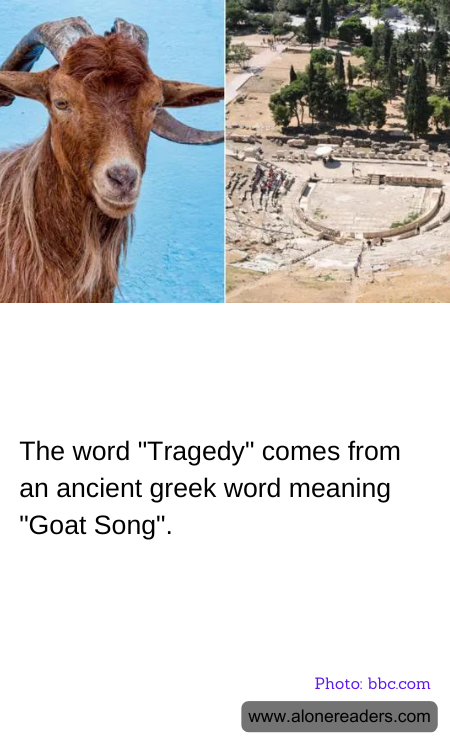
The word "tragedy" is deeply embedded in the lexicon of literature and drama, evoking images of profound sorrow and cathartic storytelling. However, its etymological roots trace back to a rather unexpected origin: the ancient Greek term "tragoidia," which intriguingly translates to "goat song." This peculiar connection between goats and the somber narratives of tragedy offers a fascinating glimpse into the cultural and historical contexts of ancient Greece.
The term "tragoidia" is derived from two Greek words: "tragos," meaning goat, and "oide," meaning song. The association with goats is believed to be linked to the Dionysian festivals, which were central to Greek culture. Dionysus, the god of wine, fertility, and revelry, was often celebrated with theatrical performances that included choral songs and dances. Goats were sacred to Dionysus, and they were frequently sacrificed in his honor during these festivals. It is speculated that the earliest forms of tragedy were performed as part of these rituals, with the chorus singing songs in homage to the deity, possibly while dressed in goat skins or masks.
The evolution of tragedy from these ritualistic beginnings to the sophisticated art form we recognize today is a testament to the ingenuity of ancient Greek playwrights. Figures like Aeschylus, Sophocles, and Euripides transformed these early "goat songs" into complex narratives that explored the human condition, fate, and the divine. Their works delved into themes of hubris, moral dilemmas, and the inevitable suffering that often accompanies human existence. Despite the somber themes, these plays were not merely exercises in despair; they served as a means for audiences to experience catharsis, a purging of emotions that left them with a deeper understanding of life and their place within it.
The transition from "goat song" to the tragedies we know today underscores the dynamic nature of language and culture. It highlights how words can evolve, taking on new meanings and connotations over time. The ancient Greeks' ability to transform a ritualistic practice into a profound literary genre speaks to their innovative spirit and their enduring influence on Western culture.
In modern times, the word "tragedy" has transcended its theatrical origins to describe any event marked by great loss or misfortune. Yet, understanding its roots in "goat song" offers a richer appreciation of how ancient traditions have shaped contemporary language and thought. It reminds us that even the most somber expressions of human experience can have humble, even whimsical beginnings, and that the arts continue to be a powerful vehicle for exploring the complexities of life.