More About This Card
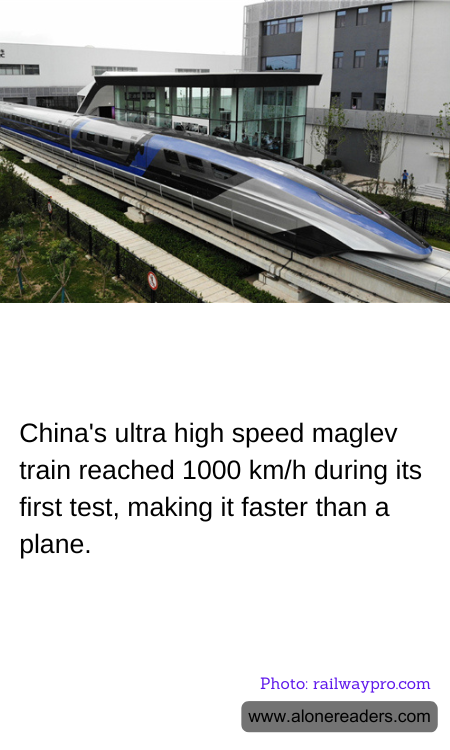
In a groundbreaking development that could redefine the future of transportation, China's ultra high-speed maglev train has reached a staggering speed of 1000 kilometers per hour during its first test run. This remarkable achievement not only sets a new benchmark in rail travel but also positions the maglev train as a formidable competitor to air travel, traditionally the fastest mode of transportation for long distances.
The maglev train, short for magnetic levitation, operates using powerful magnets that lift and propel the train along a guideway, eliminating friction and allowing for unprecedented speeds. This technology has been in development for several years, with China at the forefront of its advancement. The recent test, conducted on a specially designed track, marks a significant milestone in the country's ambitious plans to revolutionize its transportation infrastructure.
Traveling at 1000 km/h, the maglev train surpasses the cruising speed of most commercial airplanes, which typically fly at speeds between 800 and 900 km/h. This leap in speed could drastically reduce travel times between major cities, making it possible to cover vast distances in a fraction of the time currently required. For instance, a journey from Beijing to Shanghai, which takes about four and a half hours by conventional high-speed train, could potentially be completed in just over an hour with the maglev.
Beyond speed, the maglev train offers several other advantages. It is expected to be more environmentally friendly than air travel, as it produces no direct emissions and requires less energy per passenger. Additionally, the absence of friction means less wear and tear on the train and track, potentially reducing maintenance costs and increasing the system's longevity.
China's commitment to advancing maglev technology is part of a broader strategy to enhance its transportation network and reduce reliance on air travel. The country has already made significant investments in high-speed rail and is now looking to maglev as the next frontier. If successfully implemented on a large scale, this technology could transform not only domestic travel but also international travel, offering a faster, more sustainable alternative to flying.
While the test run is a promising step forward, several challenges remain before maglev trains become a common sight. Infrastructure development, safety standards, and cost considerations are all factors that need to be addressed. However, with continued investment and innovation, the vision of a world connected by ultra high-speed trains is becoming increasingly plausible.
As China continues to push the boundaries of what's possible in transportation, the successful test of the 1000 km/h maglev train is a testament to human ingenuity and the relentless pursuit of progress. It heralds a new era where the speed of travel is no longer constrained by the limitations of traditional technology, opening up exciting possibilities for the future of global connectivity.