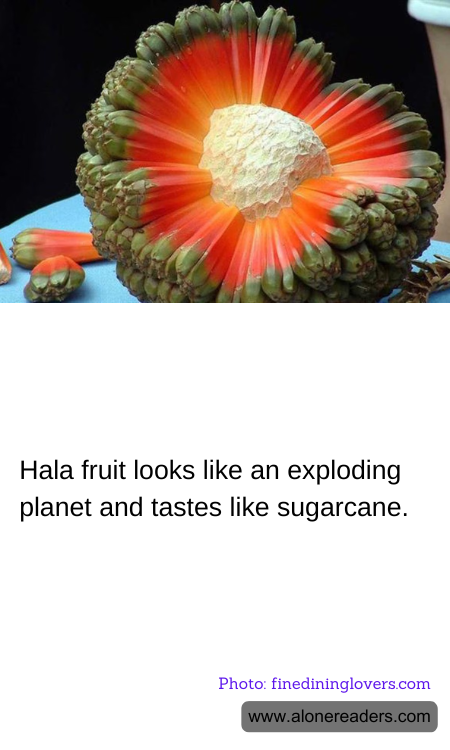
In the vast and diverse world of tropical fruits, the hala fruit stands out not only for its unique appearance but also for its intriguing taste. Resembling an exploding planet, the hala fruit captivates the imagination with its vibrant and unusual structure. Found primarily in the coastal regions of the Pacific Islands, Southeast Asia, and parts of Australia, this fruit is a staple in many indigenous diets and holds cultural significance in various communities.
The hala fruit, also known as the pandanus fruit, is a sight to behold. Its exterior is composed of numerous segments, known as keys or phalanges, which radiate from the center like the fiery tendrils of a cosmic explosion. These segments are tightly packed together, creating a spherical shape that can range in color from bright orange to deep red, depending on its ripeness. The visual allure of the hala fruit is matched by its tactile experience; the keys can be pulled apart individually, revealing a fibrous interior that is both intriguing and inviting.
Beyond its striking appearance, the hala fruit offers a taste that is both familiar and exotic. Many who have sampled it liken its flavor to that of sugarcane, with a sweet, slightly woody taste that is refreshing and satisfying. The fibrous texture of the fruit adds an interesting dimension to its consumption, as it requires a bit of effort to chew and savor the sweet juices within. This unique combination of taste and texture makes the hala fruit a delightful treat for those willing to explore beyond the conventional fruit basket.
In addition to its culinary appeal, the hala fruit holds a special place in the cultures where it grows. In many Pacific Island communities, the fruit is not only a source of nourishment but also a symbol of hospitality and abundance. It is often used in traditional ceremonies and celebrations, where its vibrant appearance and sweet taste are appreciated by all. Moreover, the leaves of the pandanus tree, from which the hala fruit grows, are utilized in weaving and crafting, showcasing the plant's versatility and importance in daily life.
For those seeking to experience the wonders of the hala fruit, it is best enjoyed fresh, where its full flavor and texture can be appreciated. However, it can also be found in various forms, such as dried or processed into jams and juices, allowing a wider audience to experience its unique qualities. As the world becomes more interconnected, the hala fruit is slowly gaining recognition beyond its native regions, inviting adventurous eaters to discover its cosmic charm.
In conclusion, the hala fruit is a testament to the incredible diversity of nature's bounty. Its appearance, reminiscent of an exploding planet, and its sweet, sugarcane-like taste make it a fascinating subject for both the eyes and the palate. Whether enjoyed fresh or in various culinary creations, the hala fruit offers a delightful journey into the world of tropical flavors, inviting all ages to explore and appreciate its unique beauty and taste.
