More About This Card
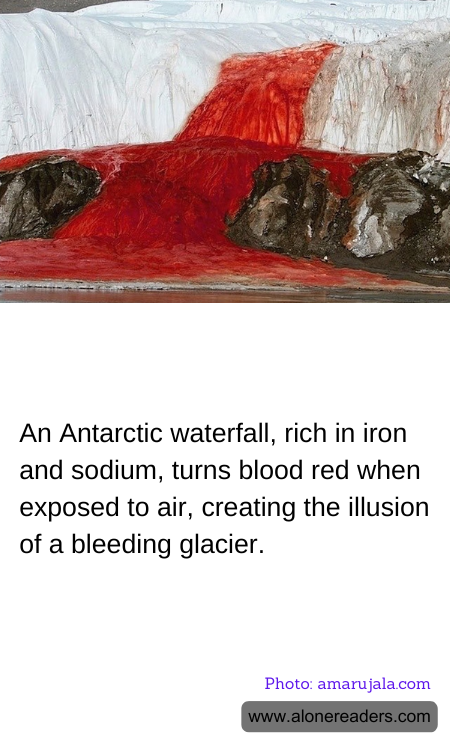
In the remote and icy expanse of Antarctica, a striking natural phenomenon known as Blood Falls captures the imagination of scientists and explorers alike. This eerie spectacle, where a waterfall appears to bleed from the Taylor Glacier, is a vivid reminder of the planet's hidden wonders. The waterfall's crimson hue, which starkly contrasts with the surrounding white ice, is not the result of any supernatural occurrence but rather a fascinating interplay of natural elements.
The source of Blood Falls' distinctive color lies in its rich composition of iron and sodium. The water that emerges from the glacier is ancient, having been trapped beneath the ice for millions of years. This subglacial lake is isolated from the atmosphere, creating an environment devoid of light and oxygen. Over time, the water became saturated with iron due to the geological processes occurring beneath the glacier. When this iron-rich water finally makes its way to the surface and is exposed to the air, it undergoes a chemical reaction. The iron oxidizes, much like rust forming on metal, and turns a deep red, giving the waterfall its blood-like appearance.
This natural marvel was first discovered in 1911 by Australian geologist Griffith Taylor, after whom the glacier is named. Initially, the red coloration was thought to be due to red algae, but further research revealed the true cause to be the oxidization of iron. The presence of sodium in the water also plays a crucial role, as it helps maintain the liquid state of the water despite the frigid temperatures, allowing it to flow freely from the glacier.
Blood Falls is more than just a visual spectacle; it offers a unique glimpse into the hidden ecosystems that thrive in extreme conditions. The subglacial lake beneath Taylor Glacier is home to a community of microorganisms that have adapted to survive without sunlight or oxygen. These extremophiles rely on the iron and sulfur compounds in their environment for energy, providing scientists with valuable insights into the potential for life in similar harsh environments, such as those found on other planets and moons.
The study of Blood Falls and its underlying systems continues to intrigue researchers, as it challenges our understanding of life and geological processes. It serves as a reminder of the Earth's dynamic nature and the intricate connections between its various components. For visitors to Antarctica, Blood Falls stands as a testament to the continent's untamed beauty and the mysteries that lie beneath its icy surface.
In a world where much remains unexplored, Blood Falls is a symbol of discovery and the enduring curiosity that drives scientific exploration. It invites us to look beyond the surface and appreciate the complex interactions that shape our planet, encouraging a deeper appreciation for the natural world and its myriad wonders.