More About This Card
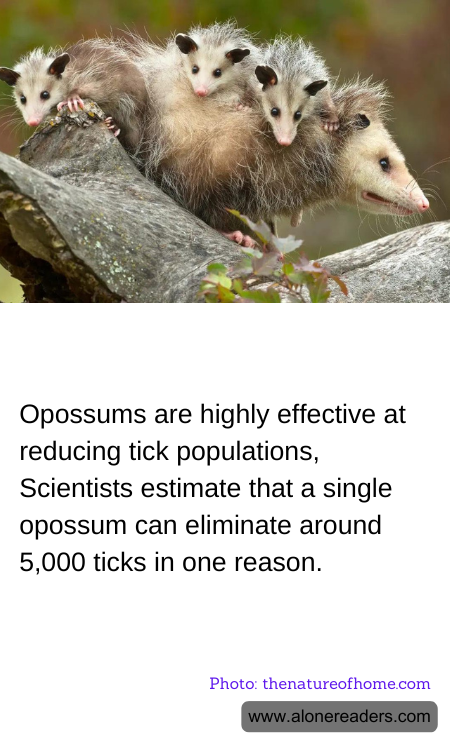
In the intricate web of ecosystems, every creature plays a role, and the opossum is no exception. Often misunderstood and overlooked, these nocturnal marsupials are emerging as unsung heroes in the battle against tick-borne diseases. Scientists have discovered that opossums are remarkably effective at reducing tick populations, with estimates suggesting that a single opossum can eliminate around 5,000 ticks in one season.
Opossums are nature's unlikely tick terminators. As they forage through forests and backyards, they inadvertently collect ticks on their fur. Unlike other animals, opossums are meticulous groomers. They spend a significant amount of time each day cleaning themselves, and in the process, they consume the ticks they find. This natural behavior significantly reduces the number of ticks that survive to reproduce, thereby curbing the spread of diseases such as Lyme disease, which is transmitted by ticks.
The impact of opossums on tick populations is not just beneficial for the opossums themselves but also for humans and other animals. Ticks are vectors for several diseases that can affect humans, pets, and wildlife. By keeping tick numbers in check, opossums help reduce the risk of these diseases spreading. This is particularly important as tick-borne illnesses have been on the rise in many parts of the world, posing a growing public health concern.
Despite their beneficial role, opossums often face negative perceptions. They are sometimes seen as pests due to their scavenging habits and their tendency to play dead when threatened. However, understanding their ecological importance can help shift these perceptions. Encouraging opossums to thrive in their natural habitats can be a simple and effective strategy to manage tick populations without resorting to chemical pesticides, which can have harmful environmental effects.
Promoting opossum-friendly environments can be as simple as allowing natural vegetation to flourish and providing safe passageways for these creatures to move through their habitats. Homeowners can also help by avoiding the use of rodenticides and other poisons that can harm opossums and disrupt their role in the ecosystem.
In conclusion, opossums are more than just curious creatures of the night; they are vital allies in maintaining ecological balance. Their ability to control tick populations naturally makes them an important part of the ecosystem, offering a sustainable solution to a growing problem. By appreciating and protecting opossums, we can harness their natural pest control abilities and contribute to healthier environments for all.