More About This Card
In the realm of mythical creatures, unicorns have long captured the human imagination, often depicted as graceful, horse-like beings with a single spiraling horn. However, recent scientific discoveries suggest that unicorns were not entirely the stuff of legend. Approximately 29,000 years ago, a creature known as the Siberian unicorn roamed the Earth, challenging our perceptions of these fabled animals.
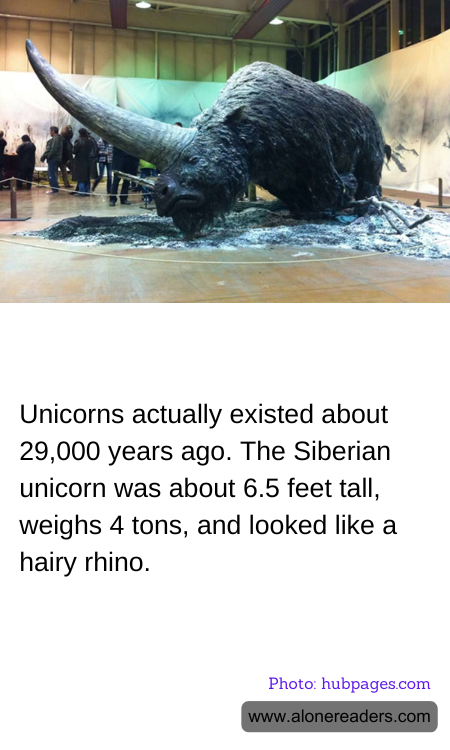
The Siberian unicorn, or Elasmotherium sibiricum, was a far cry from the delicate creatures of fairy tales. Standing at an impressive 6.5 feet tall and weighing around 4 tons, this prehistoric giant bore a closer resemblance to a hairy rhinoceros than to the elegant unicorns of lore. Its most striking feature was a massive horn, which scientists believe could have been up to several feet long. This formidable horn, likely used for defense and foraging, was the defining characteristic that linked the Siberian unicorn to the mythical unicorns of human imagination.
Fossil evidence of the Siberian unicorn was first discovered in the steppes of Eurasia, particularly in regions that are now part of modern-day Russia and Kazakhstan. These fossils reveal a creature well-adapted to its environment, with a robust body covered in a thick coat of hair, ideal for surviving the harsh, cold climates of the Ice Age. The Siberian unicorn's diet primarily consisted of tough, dry grasses, which it grazed upon using its large, flat teeth.
For many years, it was believed that the Siberian unicorn had gone extinct much earlier, around 200,000 years ago. However, recent advancements in radiocarbon dating have provided new insights, revealing that these creatures survived until as recently as 29,000 years ago. This timeline suggests that early humans might have coexisted with these magnificent beasts, potentially giving rise to the unicorn myths that have persisted throughout history.
The discovery of the Siberian unicorn not only enriches our understanding of prehistoric life but also highlights the fascinating ways in which reality can inspire myth. While the Siberian unicorn may not have possessed the ethereal beauty of its mythical counterpart, its existence serves as a reminder of the incredible diversity of life that once thrived on our planet. As scientists continue to unearth and study these ancient creatures, we gain a deeper appreciation for the natural world and the stories it inspires.
In conclusion, the Siberian unicorn stands as a testament to the power of nature to fuel human imagination. Though it may not have been the graceful, magical creature of legend, its legacy endures, bridging the gap between myth and reality. As we continue to explore our planet's rich history, who knows what other mythical beings might turn out to have roots in the real world?