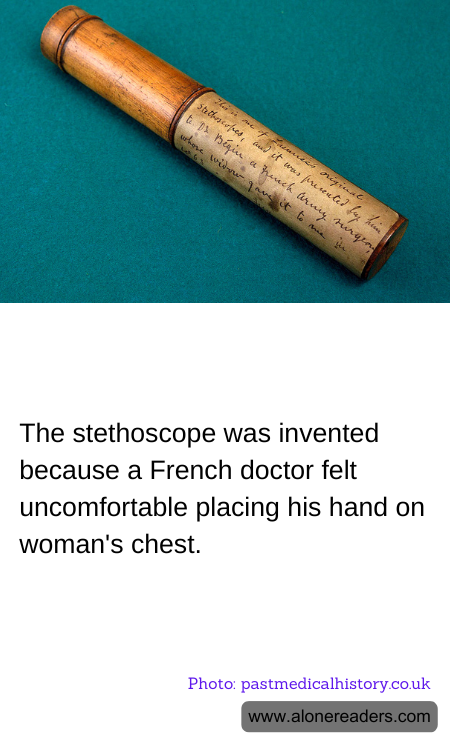
In the early 19th century, medical practices were vastly different from what we know today. Physicians relied heavily on direct contact and rudimentary tools to diagnose ailments. It was during this time that a pivotal invention in medical history emerged, born out of a sense of propriety and necessity. The stethoscope, a now indispensable tool in the medical field, was invented by a French doctor named René Laennec, who felt uncomfortable placing his hand on a woman's chest during an examination.
René Laennec, a physician working in Paris, encountered a situation that would change the course of medical diagnostics. In 1816, he was called to examine a young woman with symptoms of heart disease. At the time, the common practice for listening to heart and lung sounds was to place the ear directly on the patient's chest, a method known as immediate auscultation. However, Laennec found this approach inappropriate and awkward, particularly with female patients. Driven by a desire to maintain decorum and respect, he sought an alternative method.
Inspired by observing children playing with long, hollow sticks to amplify sounds, Laennec rolled up a piece of paper into a tube and placed one end on the patient's chest and the other to his ear. To his surprise, he discovered that this simple device amplified the sounds of the heart and lungs more clearly than ever before. This rudimentary paper tube was the precursor to the modern stethoscope, which Laennec later refined into a wooden instrument. He named it the "stethoscope," derived from the Greek words "stethos" (chest) and "skopein" (to look or to observe).
Laennec's invention revolutionized the field of medicine by providing a non-invasive and effective means of diagnosing chest conditions. The stethoscope allowed doctors to hear the internal sounds of the body with greater clarity, leading to more accurate diagnoses and improved patient care. Over time, the stethoscope evolved, incorporating flexible tubing and binaural earpieces, becoming the iconic tool recognized worldwide today.
The invention of the stethoscope marked a significant advancement in medical technology, bridging the gap between patient comfort and diagnostic precision. It underscored the importance of innovation driven by empathy and respect for patients, setting a precedent for future medical advancements. Laennec's creation not only enhanced the practice of medicine but also highlighted the role of creativity and sensitivity in addressing the challenges faced by healthcare professionals.
Today, the stethoscope remains a symbol of the medical profession, a testament to the ingenuity sparked by a simple desire to maintain dignity and professionalism. It serves as a reminder of how a small, thoughtful innovation can have a profound impact on the world, improving the lives of countless individuals and shaping the future of healthcare.
