More About This Card
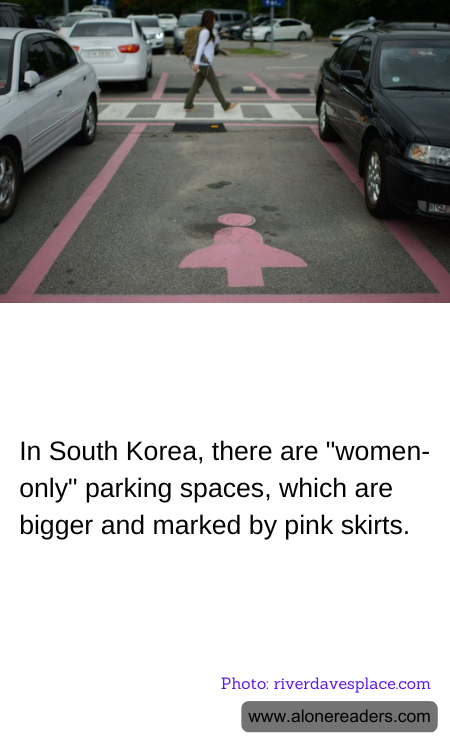
In South Korea, an intriguing urban planning initiative has sparked both interest and debate: the introduction of "women-only" parking spaces. These designated areas, marked by their distinctive pink skirts, are designed to be wider and more conveniently located than standard parking spots. This initiative, which began in Seoul, aims to enhance safety and convenience for female drivers, reflecting broader societal efforts to address gender-specific needs in public spaces.
The concept of women-only parking spaces is part of a larger urban development strategy known as the "Women Friendly Seoul Project," launched in 2009. This initiative seeks to make the city more accommodating for women by improving infrastructure and services. The parking spaces are strategically placed in well-lit, high-traffic areas, often near entrances of shopping centers, office buildings, and public facilities. The intention is to provide a safer environment for women, particularly during late hours when safety concerns are heightened.
These parking spaces are also slightly larger than regular ones, accommodating the needs of drivers who may require more space for maneuvering. This aspect of the initiative acknowledges that some drivers, regardless of gender, may feel more comfortable with additional room to park, thus reducing the stress and potential for accidents in crowded parking lots.
While the initiative has been praised for its focus on women's safety and convenience, it has also faced criticism. Some argue that it reinforces gender stereotypes by implying that women need special accommodations to park. Critics suggest that the focus should instead be on improving overall safety and accessibility for all drivers, regardless of gender. Others point out that the initiative could inadvertently stigmatize female drivers by suggesting they are less capable than their male counterparts.
Despite these criticisms, the women-only parking spaces have been largely well-received by many who appreciate the added sense of security and ease they provide. They represent a broader trend in urban planning that seeks to address the unique needs of different demographic groups, ensuring that public spaces are inclusive and accessible to all.
In conclusion, South Korea's women-only parking spaces are a fascinating example of how urban planning can be tailored to meet specific societal needs. While they have sparked debate, they also highlight the importance of considering diverse perspectives in the design of public spaces. As cities around the world continue to evolve, initiatives like these may serve as valuable case studies in the ongoing effort to create safer, more inclusive urban environments.