More About This Card
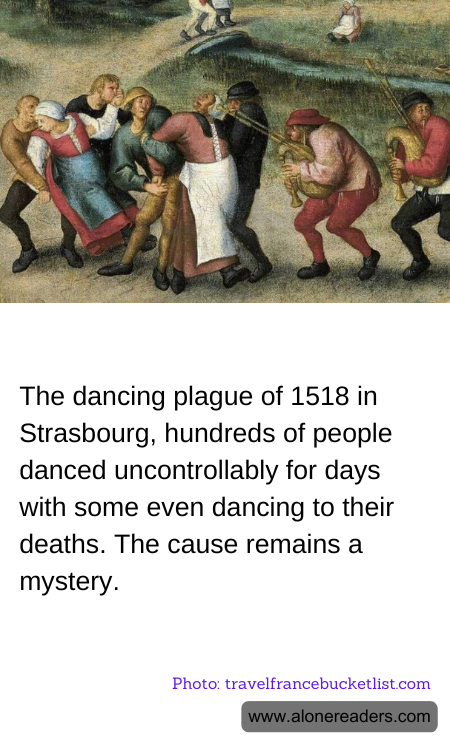
In the summer of 1518, the city of Strasbourg, then part of the Holy Roman Empire, was gripped by a bizarre and unsettling phenomenon that has puzzled historians and scientists for centuries. Known as the Dancing Plague of 1518, this strange event saw hundreds of people inexplicably compelled to dance uncontrollably for days on end, with some reportedly dancing to their deaths. The cause of this mysterious affliction remains unknown, leaving it shrouded in intrigue and speculation.
The outbreak began in July when a woman known as Frau Troffea stepped into the streets and began to dance fervently. Her movements were not those of joy or celebration but appeared involuntary and frantic. Within a week, dozens of others had joined her, and by the end of the month, the number had swelled to around 400 people. The dancers, seemingly unable to stop, continued their relentless movements despite exhaustion, injury, and even death. Contemporary accounts describe the scene as both mesmerizing and horrifying, with onlookers unsure whether to be entertained or alarmed.
Authorities in Strasbourg were baffled by the phenomenon and sought to address it by encouraging more dancing, believing that the afflicted would recover if they danced it out of their systems. They even went so far as to hire musicians and construct a stage to facilitate the dancers. However, this approach only seemed to exacerbate the situation, as more people succumbed to the compulsion, and the death toll rose. The exact number of fatalities is unclear, but it is believed that several people died from heart attacks, strokes, or sheer exhaustion.
Theories about the cause of the Dancing Plague have varied widely over the years. Some historians have suggested that it was a form of mass hysteria, possibly triggered by the stress and hardships of the time, including famine and disease. Others have speculated that it could have been caused by ergot poisoning, a condition resulting from consuming rye bread contaminated with a toxic mold that can cause hallucinations and convulsions. However, neither theory fully explains the scale and nature of the event.
Despite the passage of more than five centuries, the Dancing Plague of 1518 remains an enigmatic chapter in history. It serves as a reminder of the complexities of human psychology and the mysteries that still elude our understanding. While the true cause of the dancing mania may never be known, the event continues to capture the imagination of scholars and the public alike, standing as a testament to the strange and unpredictable nature of human behavior.