More About This Card
In the annals of history, wars have often been sparked by territorial disputes, political ambitions, or ideological differences. However, one of the most peculiar conflicts erupted in the fourth century B.C. in Italy, where a seemingly trivial incident involving a wooden bucket led to a prolonged and intense war between two cities. This unusual episode serves as a reminder of how minor provocations can escalate into significant confrontations.
The cities at the heart of this conflict were Modena and Bologna, two neighboring city-states in the region of Emilia-Romagna. The rivalry between these cities was not uncommon, as both sought to assert their dominance and influence in the region. However, the catalyst for the war was an event that would seem trivial by modern standards: the theft of a wooden bucket.
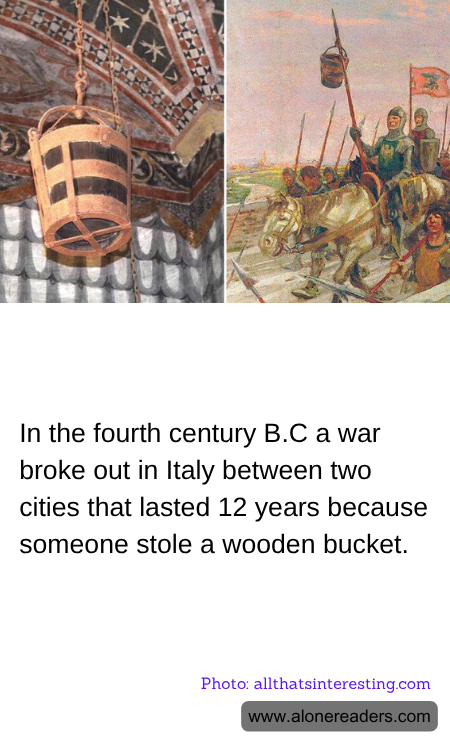
The story goes that a group of soldiers from Modena, during a raid on Bologna, managed to steal a wooden bucket from a well. This bucket, though ordinary in appearance, was a symbol of civic pride for the people of Bologna. Its theft was perceived not just as a loss of property but as an affront to the city's honor and dignity. The citizens of Bologna, incensed by the audacity of the theft, demanded the immediate return of the bucket and an apology from Modena.
Modena, however, refused to comply, viewing the bucket as a trophy of their successful raid. This refusal only fueled the anger of Bologna, and what began as a demand for restitution quickly escalated into a full-blown war. For twelve long years, the two cities engaged in a series of battles, each determined to assert their superiority and reclaim their honor.
The war over the wooden bucket is a fascinating example of how human emotions and perceptions of honor can drive societies to conflict. While the bucket itself was of little intrinsic value, the symbolic weight it carried was immense. It represented the pride and identity of Bologna, and its loss was seen as an intolerable insult.
Throughout the twelve years of conflict, both cities suffered significant losses. The war drained resources, claimed lives, and left a lasting impact on the region. Yet, despite the prolonged hostilities, the original cause of the war—the wooden bucket—remained unresolved. It was not until both sides were exhausted and weary of the continuous fighting that a peace agreement was finally reached.
The war over the wooden bucket serves as a poignant lesson in the history of human conflict. It highlights the dangers of allowing pride and perceived slights to dictate actions, leading to unnecessary and prolonged suffering. In today's world, where conflicts can arise from seemingly minor provocations, the story of Modena and Bologna reminds us of the importance of diplomacy, understanding, and the ability to look beyond immediate grievances to seek peaceful resolutions.