More About This Card
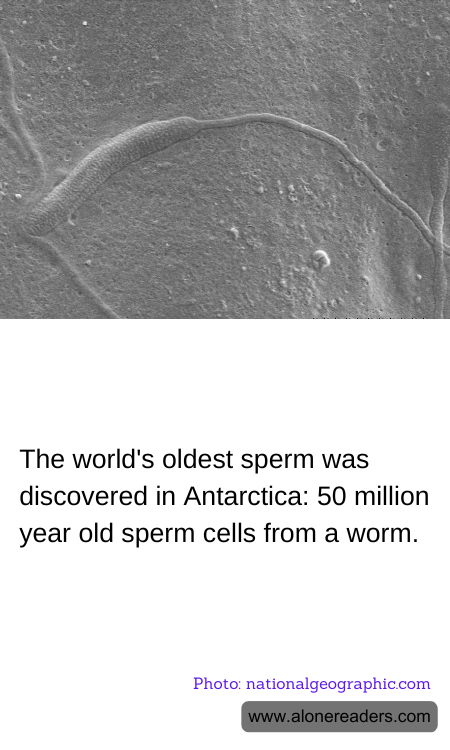
In a remarkable discovery that has captivated the scientific community and intrigued the public, researchers have unearthed what is believed to be the world's oldest sperm cells. These ancient reproductive cells, estimated to be around 50 million years old, were found in the frozen expanse of Antarctica, preserved within the fossilized remains of a worm. This finding not only sheds light on the reproductive strategies of ancient organisms but also offers a unique glimpse into the evolutionary history of life on Earth.
The discovery was made by a team of paleontologists who were conducting research in the Seymour Island region of Antarctica, an area known for its rich fossil deposits. The fossilized worm, belonging to a group of marine invertebrates known as annelids, was found encased in sedimentary rock. Upon closer examination, the researchers identified the presence of sperm cells within the worm's reproductive structures. The preservation of these cells is attributed to the unique conditions of the Antarctic environment, where cold temperatures and rapid burial likely contributed to their exceptional state of conservation.
This finding is significant for several reasons. Firstly, it provides direct evidence of the reproductive biology of ancient annelids, a group that includes modern-day earthworms and leeches. Understanding the reproductive strategies of these early organisms can offer insights into how they adapted to their environments and how they may have contributed to the biodiversity of ancient ecosystems. Additionally, the discovery of such well-preserved sperm cells opens up new avenues for studying the molecular and genetic makeup of ancient life forms, potentially allowing scientists to reconstruct aspects of their biology that have long been lost to time.
Moreover, the discovery highlights the importance of Antarctica as a repository of ancient biological information. The continent's harsh climate and remote location have preserved a wealth of fossils that provide valuable data on the history of life on Earth. As climate change continues to impact the polar regions, there is an increasing urgency to study and document these resources before they are lost. The fossilized sperm cells serve as a reminder of the delicate balance of preservation and the fleeting nature of scientific opportunity.
In conclusion, the unearthing of 50 million-year-old sperm cells in Antarctica is a testament to the resilience and adaptability of life. It underscores the interconnectedness of past and present ecosystems and the ongoing quest to understand the origins and evolution of life on our planet. As researchers continue to explore the frozen frontiers of Antarctica, who knows what other secrets of ancient life await discovery beneath the ice? This remarkable find not only enriches our understanding of the past but also inspires future generations to continue the pursuit of knowledge in the ever-evolving story of life on Earth.