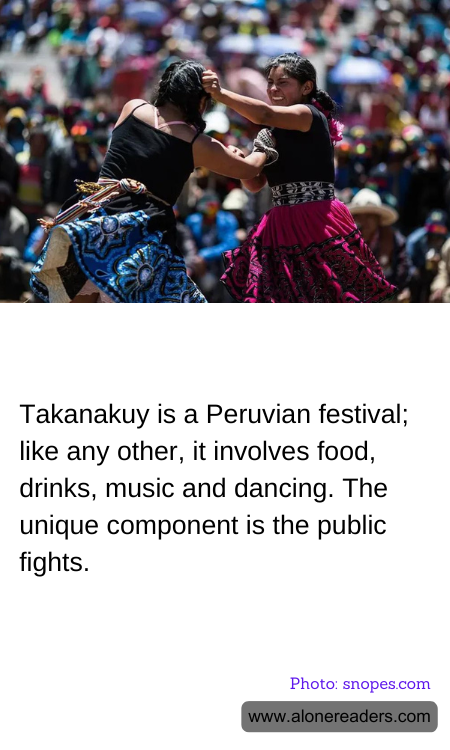
In the heart of the Peruvian Andes, a unique and vibrant festival unfolds every December 25th, drawing locals and curious visitors alike to the small town of Santo Tomás in the Chumbivilcas Province. This festival, known as Takanakuy, is a celebration unlike any other, blending the familiar elements of food, drinks, music, and dancing with an unexpected twist: public fights.
Takanakuy, which means "to hit each other" in Quechua, is a traditional event that serves as a cathartic release for the community. It provides a structured environment where grievances accumulated over the year can be settled through physical combat. Participants, often dressed in colorful costumes that reflect a mix of indigenous and colonial influences, step into a makeshift ring to face off against each other. These fights are not random acts of violence but are instead governed by a strict code of conduct, ensuring that the confrontations remain fair and respectful.
The festival begins with a vibrant parade, where participants don elaborate costumes and masks, each representing different characters such as the Majeno, a cowboy figure, or the Negro, a representation of African slaves. This procession is accompanied by traditional music played on instruments like the charango and quena, setting a lively and festive tone. As the parade winds through the town, the air is filled with the aroma of local delicacies being prepared, such as roasted pork and cuy, a traditional dish made from guinea pig, offering a feast for both the eyes and the palate.
As the day progresses, the focus shifts to the main event: the fights. These bouts are open to anyone willing to participate, regardless of age or gender, and are overseen by referees who ensure that the rules are followed. The fights are brief, often lasting only a few minutes, and are concluded with a handshake or embrace, symbolizing the resolution of conflict and the restoration of harmony within the community. Spectators cheer and encourage the fighters, creating an atmosphere of camaraderie and mutual respect.
Despite its seemingly aggressive nature, Takanakuy is a celebration of community and reconciliation. It allows individuals to confront personal disputes in a controlled and socially accepted manner, preventing long-standing grudges from festering. The festival also serves as a reminder of the resilience and adaptability of indigenous traditions, which have persisted and evolved over centuries.
For visitors, Takanakuy offers a rare glimpse into the rich cultural tapestry of Peru, where ancient customs continue to thrive alongside modern influences. It is a testament to the enduring spirit of the Andean people, who have found a unique way to balance conflict and celebration, ensuring that the bonds of community remain strong. As the sun sets over the Andes, the sounds of music and laughter echo through the town, marking the end of another successful Takanakuy and the beginning of a new year filled with hope and renewed friendships.
