More About This Card
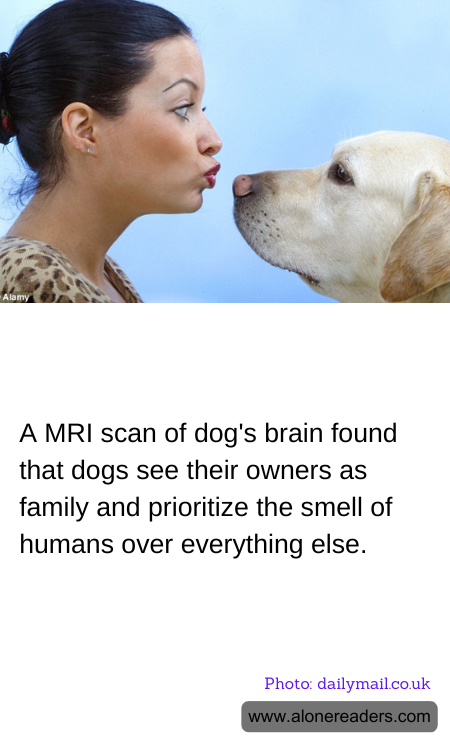
In a fascinating revelation that underscores the profound bond between humans and their canine companions, recent MRI scans of dogs' brains have provided compelling evidence that dogs perceive their owners as family. This groundbreaking study highlights that dogs prioritize the scent of their human companions above all else, offering a scientific explanation for the deep connection many dog owners feel with their pets.
The study involved scanning the brains of several dogs while exposing them to various scents, including those of familiar humans, unfamiliar humans, familiar dogs, and unfamiliar dogs. The results were striking: the scent of a familiar human activated the reward centers in the dogs' brains more than any other scent. This suggests that dogs not only recognize their owners but also associate them with positive feelings, akin to the way humans feel about their family members.
This discovery is particularly significant as it provides a neurological basis for the behaviors many dog owners observe daily. Dogs often greet their owners with enthusiasm, wagging tails, and an eagerness that seems to surpass their reactions to other stimuli. The MRI scans reveal that this behavior is not merely a learned response but is deeply rooted in the dogs' brain chemistry. The activation of the reward centers indicates that dogs derive genuine pleasure and comfort from the presence and scent of their human family members.
Moreover, this research sheds light on the evolutionary aspects of the human-dog relationship. Dogs were among the first animals to be domesticated by humans, and over thousands of years, they have developed a unique ability to understand and bond with humans. The prioritization of human scent suggests that dogs have evolved to rely on their human companions for safety, food, and social interaction, reinforcing the idea that they see humans as integral members of their social group.
For dog owners, this study offers a heartwarming affirmation of the mutual affection shared with their pets. It emphasizes the importance of the human-dog relationship and the role that scent plays in maintaining this bond. Understanding that dogs view their owners as family members can enhance the way humans interact with their pets, encouraging more meaningful and empathetic relationships.
In conclusion, the MRI scans of dogs' brains have provided a scientific basis for the age-old belief that dogs are man's best friend. By prioritizing the scent of their human companions, dogs demonstrate a level of loyalty and affection that is both remarkable and deeply touching. This research not only enriches our understanding of canine behavior but also strengthens the emotional ties between humans and their beloved pets, reminding us of the special place dogs hold in our hearts and homes.