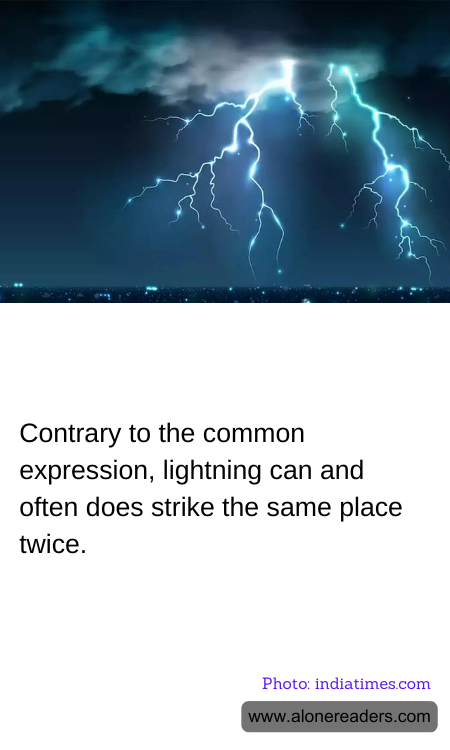
The age-old adage "lightning never strikes the same place twice" is often used to suggest that unlikely events are not likely to happen again. However, when it comes to the natural world, this saying doesn't hold up to scrutiny. In reality, lightning can and often does strike the same place multiple times, and understanding why this happens can be both fascinating and enlightening.
Lightning is a powerful electrical discharge caused by imbalances between storm clouds and the ground, or within the clouds themselves. It seeks the path of least resistance to the ground, which often leads it to strike tall, isolated, or conductive objects. This is why skyscrapers, trees, and even mountain peaks are frequent targets. The Empire State Building in New York City, for example, is struck by lightning around 20 to 25 times each year. This is a clear testament to the fact that lightning can and does strike the same place repeatedly.
The misconception that lightning doesn't strike the same place twice likely stems from a misunderstanding of how lightning works. Once a location has been struck, it doesn't become immune to future strikes. In fact, if the conditions that made it a target in the first place remain unchanged, it is just as likely to be struck again. Factors such as height, isolation, and conductivity make certain locations more prone to repeated strikes. For instance, tall structures equipped with lightning rods are specifically designed to attract lightning and safely conduct its energy to the ground, thereby protecting the surrounding area.
Moreover, the idea that lightning won't strike the same place twice can be a dangerous myth. It may lead people to underestimate the risks associated with thunderstorms, particularly in areas known for frequent lightning activity. Understanding that lightning can strike repeatedly emphasizes the importance of taking appropriate safety measures during storms. Seeking shelter indoors, avoiding open fields, and staying away from tall objects are crucial steps in minimizing the risk of being struck.
In addition to its scientific implications, the phenomenon of lightning striking the same place multiple times serves as a metaphor for life's unpredictability. Just as lightning can return to the same spot, unexpected events can recur in our lives, challenging us to remain vigilant and prepared. Embracing this understanding can help us navigate both the natural world and our personal experiences with greater awareness and resilience.
In conclusion, the notion that lightning never strikes the same place twice is a myth that doesn't hold up under scientific examination. Lightning is drawn to certain locations due to their physical characteristics, and these places can be struck multiple times. Recognizing this reality not only enhances our understanding of natural phenomena but also underscores the importance of safety and preparedness in the face of nature's unpredictable power.
