More About This Card
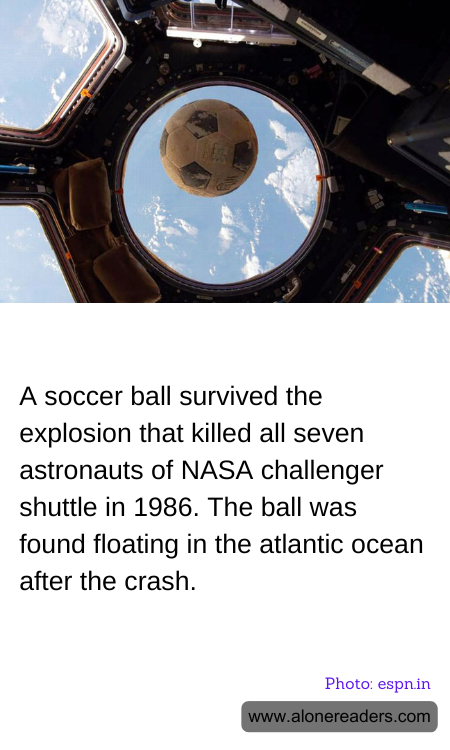
In the annals of space exploration, the Challenger disaster of January 28, 1986, stands as a poignant reminder of the risks inherent in reaching for the stars. On that fateful day, the NASA Challenger shuttle disintegrated just 73 seconds after liftoff, claiming the lives of all seven astronauts aboard. Among the wreckage, a small yet remarkable symbol of resilience emerged—a soccer ball that survived the catastrophic explosion and was later found floating in the Atlantic Ocean.
This soccer ball, seemingly insignificant in the grand scheme of space exploration, carried with it a story of hope and human connection. It belonged to astronaut Ellison Onizuka, who had taken the ball on the mission as a token from his daughter’s high school soccer team. Onizuka, the first Asian American astronaut, was known for his dedication to inspiring young people and fostering a love for science and exploration. The presence of the soccer ball aboard the Challenger was a testament to his commitment to bridging the gap between the vastness of space and the everyday lives of those on Earth.
After the disaster, the ball was discovered among the debris in the ocean, remarkably intact despite the violent forces it had endured. Its survival became a symbol of endurance and a poignant reminder of the human spirit's ability to persevere in the face of tragedy. The ball was eventually returned to Onizuka’s family and later displayed at Clear Lake High School in Houston, Texas, where it served as a source of inspiration for students and a tribute to the Challenger crew's legacy.
The story of the soccer ball is a powerful narrative of resilience and remembrance. It underscores the idea that even in the darkest moments, there are elements that endure, carrying forward the memories and dreams of those who have been lost. The ball's journey from the depths of the ocean to a place of honor in a school gymnasium is a testament to the enduring impact of the Challenger crew's mission and the indomitable spirit of exploration.
For many, the soccer ball is more than just a piece of memorabilia; it is a reminder of the importance of pursuing one's dreams and the enduring impact of those who dare to explore the unknown. It serves as a beacon of hope, encouraging future generations to look beyond the horizon and continue the quest for knowledge and understanding. In this way, the soccer ball that survived the Challenger disaster remains a symbol of hope, resilience, and the unyielding human spirit.