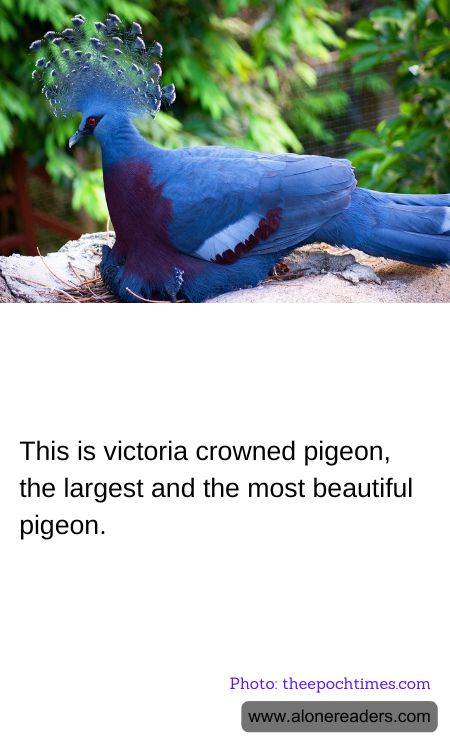
The Victoria crowned pigeon is a remarkable bird that captivates the hearts of bird enthusiasts and nature lovers alike. Known for its majestic appearance and striking features, this bird is not only the largest pigeon species in the world but also arguably the most beautiful. Native to the lowland and swamp forests of New Guinea, the Victoria crowned pigeon is a testament to the wonders of avian diversity.
With a body length that can reach up to 74 centimeters (29 inches) and a weight of about 2.5 kilograms (5.5 pounds), the Victoria crowned pigeon stands out among its peers. Its size is not the only feature that makes it extraordinary; its plumage is a stunning combination of deep blue and gray, with a distinctive white-tipped crest that resembles a delicate crown. This elegant crest is what gives the bird its regal name, honoring Queen Victoria of the United Kingdom.
The beauty of the Victoria crowned pigeon extends beyond its physical appearance. Its gentle and calm demeanor makes it a fascinating subject for observation. Unlike many other pigeon species, the Victoria crowned pigeon is not a strong flyer. Instead, it spends much of its time on the forest floor, foraging for fruits, seeds, and small invertebrates. Its diet plays a crucial role in the ecosystem, as it helps in seed dispersal, contributing to the health and regeneration of its forest habitat.
Social by nature, these pigeons are often seen in pairs or small groups. They communicate with each other through a series of deep, resonant cooing sounds, which can be heard echoing through the forest. During the breeding season, the male performs an elaborate courtship display, bowing and fanning its tail feathers to attract a mate. Once paired, both parents share the responsibility of incubating the single egg and caring for the chick, showcasing a strong bond and cooperative parenting.
Despite their beauty and ecological importance, Victoria crowned pigeons face threats from habitat loss and hunting. Deforestation and land conversion for agriculture have significantly reduced their natural habitat, while hunting for their striking plumage and meat has also contributed to their decline. Conservation efforts are crucial to ensure the survival of this magnificent species. Protected areas and breeding programs in zoos around the world play a vital role in preserving their population and raising awareness about their plight.
In conclusion, the Victoria crowned pigeon is a symbol of nature's splendor and diversity. Its impressive size, exquisite appearance, and gentle nature make it a true marvel of the avian world. By appreciating and protecting such species, we not only preserve their beauty for future generations but also maintain the delicate balance of our planet's ecosystems.
