More About This Card
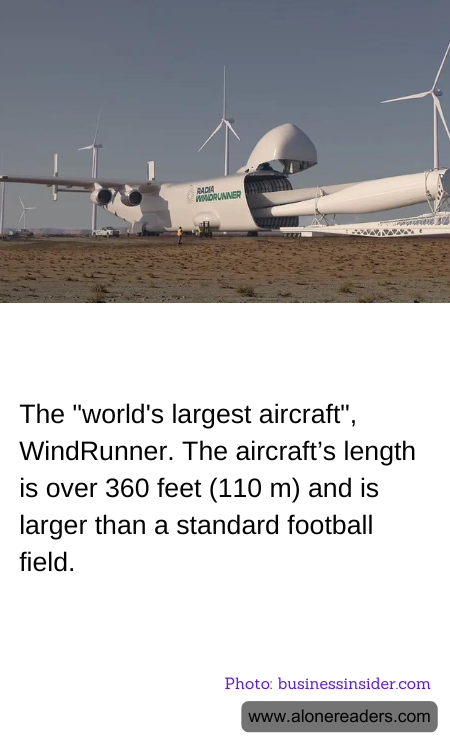
In the ever-evolving world of aviation, the WindRunner has emerged as a marvel of engineering and design, earning the title of the "world's largest aircraft." With a staggering length of over 360 feet (110 meters), this colossal machine surpasses the size of a standard football field, capturing the imagination of aviation enthusiasts and the general public alike.
The WindRunner is not just a testament to human ingenuity but also a symbol of the limitless possibilities in aircraft design. Its sheer size is not merely for show; it serves a multitude of purposes that redefine the capabilities of modern aviation. Designed to carry heavy and oversized cargo, the WindRunner is an invaluable asset for industries that require the transportation of large equipment and materials that would be impossible for traditional aircraft to handle. Its spacious interior and robust structure make it ideal for such tasks, offering a new level of efficiency and convenience.
Beyond its practical applications, the WindRunner also represents a significant step forward in sustainable aviation. Engineers have incorporated cutting-edge technology to ensure that this giant of the skies operates with minimal environmental impact. Its advanced propulsion systems are designed to maximize fuel efficiency, reducing emissions and setting a new standard for eco-friendly aviation. This focus on sustainability is crucial as the world continues to grapple with the challenges of climate change, and the WindRunner stands as a beacon of progress in this regard.
The development of the WindRunner has also spurred advancements in aerodynamics and materials science. Its construction involves the use of lightweight yet incredibly strong materials, allowing it to maintain structural integrity while minimizing weight. This innovation not only enhances performance but also contributes to the aircraft's overall efficiency, demonstrating how modern engineering can push the boundaries of what is possible.
As the WindRunner takes to the skies, it captures the imagination of people around the world. Its presence is a reminder of humanity's relentless pursuit of progress and the ability to overcome challenges through creativity and determination. The aircraft's impressive size and capabilities are not just feats of engineering but also symbols of the potential for future innovations in aviation.
In conclusion, the WindRunner is more than just the world's largest aircraft; it is a testament to the power of human innovation and a harbinger of the future of aviation. Its ability to transport massive cargo, its commitment to sustainability, and its role in advancing technology make it a remarkable achievement. As it soars through the skies, the WindRunner inspires awe and admiration, embodying the spirit of exploration and the endless possibilities that lie ahead.