More About This Card
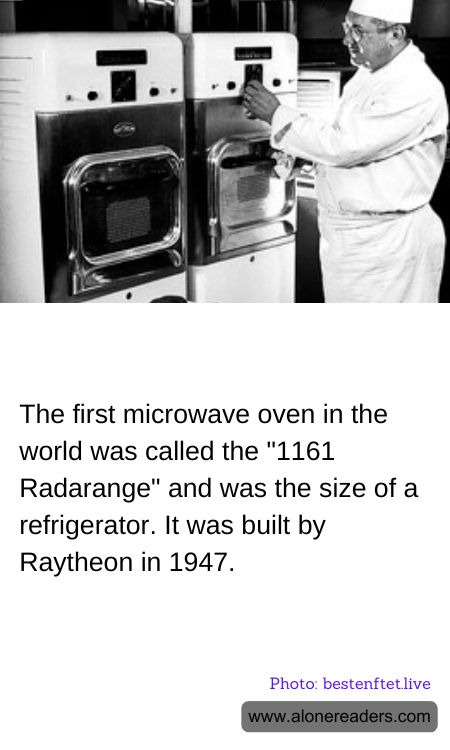
In the annals of technological innovation, the microwave oven stands out as a transformative appliance that revolutionized the way we prepare food. The journey of this ubiquitous kitchen device began with the "1161 Radarange," the world's first microwave oven, which was introduced by Raytheon in 1947. This pioneering invention was a far cry from the compact, countertop models we are familiar with today. Instead, it was a massive machine, comparable in size to a refrigerator, and marked a significant leap in culinary technology.
The inception of the microwave oven was serendipitous, stemming from the work of Percy Spencer, an engineer at Raytheon. While experimenting with radar technology during World War II, Spencer noticed that a candy bar in his pocket had melted. Intrigued by this phenomenon, he conducted further experiments, eventually discovering that microwaves could be harnessed to heat food. This accidental discovery laid the groundwork for the development of the Radarange.
The 1161 Radarange was a marvel of its time, embodying the cutting-edge technology of the post-war era. Standing nearly six feet tall and weighing over 750 pounds, it was a formidable presence in any kitchen. Unlike today's microwave ovens, which are designed for convenience and efficiency, the Radarange was a complex machine that required a significant amount of power to operate. It consumed about 3 kilowatts of electricity, a stark contrast to the 1 kilowatt used by modern microwaves.
Despite its size and power requirements, the Radarange was a groundbreaking invention that captured the imagination of the public. It offered a new way to cook food quickly and efficiently, a concept that was particularly appealing in the fast-paced post-war world. However, its size and cost—priced at around $5,000, equivalent to over $50,000 today—meant that it was initially accessible only to commercial establishments such as restaurants and hotels.
Over the years, the technology behind the Radarange was refined and miniaturized, leading to the development of more affordable and compact models for home use. By the 1970s, microwave ovens had become a common fixture in households across the globe, transforming cooking habits and making meal preparation faster and more convenient.
The legacy of the 1161 Radarange is a testament to the power of innovation and the impact of technological advancements on everyday life. From its humble beginnings as a bulky, industrial-sized appliance, the microwave oven has evolved into an essential kitchen tool, demonstrating how a single invention can change the way we live and interact with the world around us. As we continue to embrace new technologies, the story of the Radarange serves as a reminder of the endless possibilities that lie ahead in the realm of culinary innovation.