More About This Card
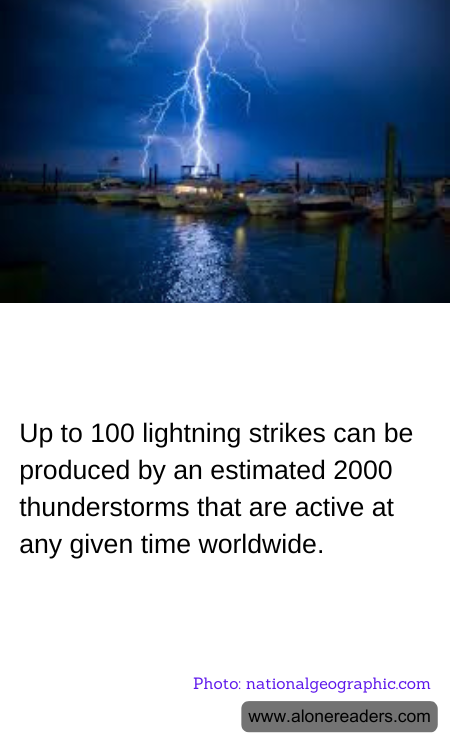
At any given moment, our planet is a stage for a spectacular natural phenomenon: thunderstorms. These powerful weather events are not just a source of awe-inspiring beauty but also a testament to the dynamic and ever-changing nature of Earth's atmosphere. It is estimated that around 2,000 thunderstorms are active worldwide at any given time, each capable of producing up to 100 lightning strikes. This staggering number highlights the sheer energy and complexity involved in these meteorological marvels.
Thunderstorms are born from the interplay of moisture, unstable air, and lift. When warm, moist air rises and cools, it forms cumulonimbus clouds, the towering giants of the sky. Within these clouds, the conditions are ripe for the creation of lightning. As the air currents within the cloud move, they cause collisions between ice particles and water droplets, generating an electrical charge. When the charge becomes sufficiently strong, it discharges as a lightning bolt, illuminating the sky and often accompanied by the rumbling sound of thunder.
Lightning is not only a breathtaking spectacle but also a critical component of Earth's ecosystem. It plays a vital role in the nitrogen cycle, helping to convert atmospheric nitrogen into a form that plants can absorb and use. This process enriches the soil and supports plant growth, which in turn sustains the food chain. Despite its benefits, lightning is also a force to be reckoned with, capable of causing wildfires, power outages, and even posing a threat to human life.
The global distribution of thunderstorms is influenced by various factors, including geography, climate, and seasonal changes. Regions near the equator, such as Central Africa, Southeast Asia, and parts of South America, experience frequent thunderstorms due to their warm, humid climates. In contrast, areas with drier climates, like deserts, see fewer storms. However, when thunderstorms do occur in these regions, they can be particularly intense.
Understanding the science behind thunderstorms and lightning is crucial for predicting and mitigating their impacts. Meteorologists use advanced technology, such as Doppler radar and satellite imagery, to track storm development and provide timely warnings to communities. This information is vital for ensuring public safety and minimizing damage to infrastructure and the environment.
For many, the sight of a thunderstorm is a reminder of nature's raw power and beauty. It inspires wonder and curiosity, prompting us to learn more about the forces that shape our world. As we continue to study and appreciate these natural phenomena, we gain a deeper understanding of the delicate balance that sustains life on Earth. Whether viewed from the safety of our homes or experienced firsthand, thunderstorms and their accompanying lightning strikes remain a captivating and essential part of our planet's dynamic systems.