More About This Card
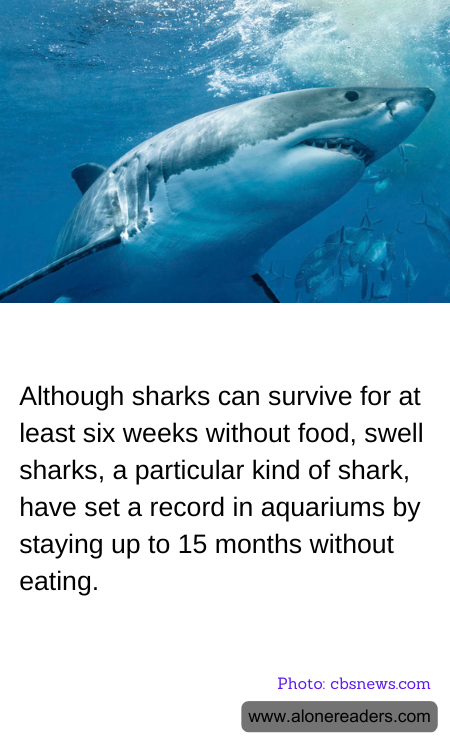
Sharks are often portrayed as relentless predators, constantly on the hunt for their next meal. However, these fascinating creatures possess remarkable adaptations that allow them to survive in environments where food is not always readily available. While many shark species can endure long periods without eating, the swell shark, a lesser-known species, has astounded researchers and aquarium enthusiasts alike by surviving up to 15 months without food.
The swell shark, scientifically known as *Cephaloscyllium ventriosum*, is a small, nocturnal shark found in the coastal waters of the eastern Pacific Ocean. Unlike their more aggressive relatives, swell sharks have a unique defense mechanism: when threatened, they can inflate their bodies to nearly twice their size by swallowing water or air, making it difficult for predators to swallow them. This fascinating behavior is just one of the many adaptations that make swell sharks intriguing subjects of study.
In the wild, sharks are opportunistic feeders, often going weeks without a meal due to the scarcity of prey. Their ability to endure such fasting periods is attributed to their slow metabolism and efficient energy use. However, the swell shark's record-breaking fasting period in captivity has raised questions about the limits of shark endurance and the physiological mechanisms that enable such prolonged survival without sustenance.
Researchers have observed that swell sharks in aquariums can enter a state of reduced metabolic activity, allowing them to conserve energy over extended periods. This adaptation is crucial for survival in their natural habitat, where food availability can be unpredictable. During these fasting periods, swell sharks rely on their fat reserves, which are stored in their liver, to sustain their energy needs. This ability to tap into stored energy is not unique to swell sharks but is a common trait among many shark species.
The swell shark's extraordinary fasting capability has implications for both conservation efforts and our understanding of shark biology. In captivity, it allows aquariums to manage feeding schedules more effectively, ensuring the health and well-being of these animals without overfeeding. In the wild, this adaptation may provide swell sharks with a survival advantage in changing ocean conditions, where prey availability may be affected by climate change and human activities.
The study of swell sharks and their remarkable fasting ability continues to captivate scientists and the public alike. It serves as a reminder of the incredible adaptability of sharks, creatures that have roamed the oceans for over 400 million years. As we learn more about these resilient animals, we gain valuable insights into the complex ecosystems they inhabit and the challenges they face in a rapidly changing world.
In conclusion, the swell shark's ability to survive up to 15 months without food is a testament to the resilience and adaptability of sharks. This remarkable feat highlights the importance of continued research and conservation efforts to protect these fascinating creatures and their habitats. As we deepen our understanding of sharks and their unique adaptations, we can better appreciate the vital role they play in maintaining the health and balance of marine ecosystems.