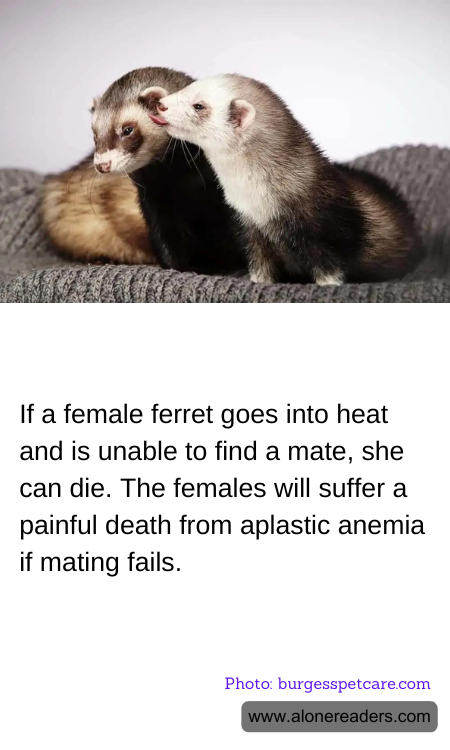
In the fascinating world of ferrets, there exists a unique and rather perilous biological phenomenon that affects female ferrets, or jills, when they enter their reproductive cycle. Unlike many other animals, female ferrets experience a condition that can lead to severe health complications if not addressed. When a jill goes into heat, her body undergoes significant hormonal changes, primarily characterized by the production of high levels of estrogen. This process, known as estrus, is a natural part of a ferret's reproductive cycle. However, it comes with a critical caveat: if the female ferret does not mate, she can suffer from a potentially fatal condition known as aplastic anemia.
Aplastic anemia in ferrets is a direct consequence of prolonged exposure to elevated estrogen levels. When a female ferret remains in heat without mating, her body continues to produce estrogen, which can suppress the bone marrow's ability to produce new blood cells. Over time, this leads to a dangerous drop in red blood cells, white blood cells, and platelets, resulting in anemia, increased susceptibility to infections, and impaired blood clotting. The symptoms of aplastic anemia in ferrets can include lethargy, pale gums, loss of appetite, and unexplained bruising or bleeding. If left untreated, this condition can lead to a painful and untimely death.
To prevent this tragic outcome, it is crucial for ferret owners to be aware of the signs of estrus and take appropriate action. One common solution is to spay female ferrets before they reach sexual maturity, effectively eliminating the risk of estrus-related complications. Spaying not only prevents the onset of aplastic anemia but also contributes to the overall health and longevity of the ferret. For those who choose not to spay their pets, it is essential to provide a safe and controlled environment for mating or to consult with a veterinarian about hormone treatments that can safely bring the ferret out of heat.
Education and awareness are key to ensuring the well-being of female ferrets. By understanding the unique reproductive needs of these animals, owners can take proactive measures to protect their pets from the dangers of prolonged estrus. Whether through spaying, responsible breeding practices, or veterinary intervention, there are several ways to safeguard the health of female ferrets and prevent the onset of aplastic anemia. With proper care and attention, ferret owners can ensure that their pets lead happy, healthy lives, free from the risks associated with this natural but potentially deadly condition.
