More About This Card
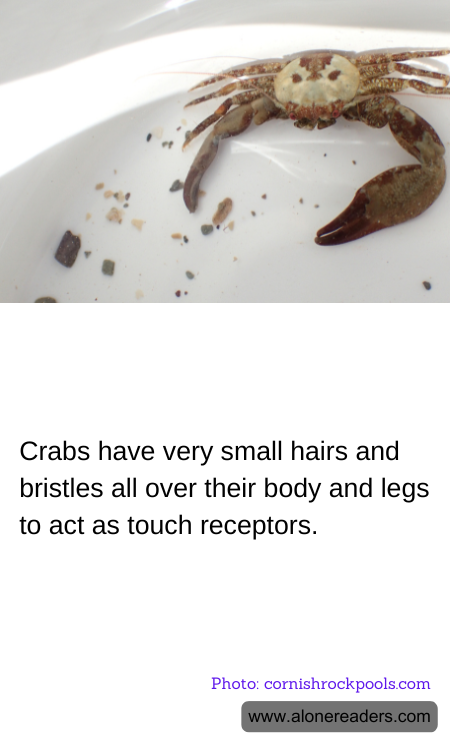
Crabs are fascinating creatures that inhabit a variety of environments, from the depths of the ocean to the sandy shores of beaches. One of the most intriguing aspects of crabs is their unique sensory system, which includes an array of tiny hairs and bristles covering their bodies and legs. These minute structures serve as touch receptors, playing a crucial role in how crabs interact with their surroundings.
The small hairs and bristles on a crab's body are known as setae. These setae are incredibly sensitive and allow crabs to detect even the slightest changes in their environment. This sensitivity is essential for their survival, as it helps them navigate their often complex habitats, find food, and avoid predators. The setae can pick up on vibrations in the water or on the ground, alerting the crab to potential threats or opportunities nearby.
In addition to detecting vibrations, the setae also help crabs sense changes in water currents and pressure. This ability is particularly important for aquatic crabs, as it aids them in maintaining balance and orientation in the ever-changing underwater world. By sensing the flow of water, crabs can adjust their movements accordingly, ensuring they remain stable and can efficiently move towards their desired destination.
The tactile sensitivity provided by these hairs and bristles is not only vital for survival but also plays a role in social interactions among crabs. During mating rituals, for instance, crabs use their setae to communicate with potential partners. The delicate touch receptors allow them to interpret subtle signals, which can be crucial in selecting a mate and ensuring the continuation of their species.
Moreover, the setae are instrumental in helping crabs explore their environment. As they scuttle across the ocean floor or along the shoreline, crabs use their legs to probe the terrain. The touch receptors in their legs provide feedback about the texture and composition of the surfaces they encounter, helping them to identify suitable habitats or locate food sources hidden beneath the sand or rocks.
In conclusion, the small hairs and bristles covering a crab's body and legs are much more than mere adornments. These touch receptors are integral to the crab's ability to survive and thrive in its environment. By providing crucial sensory information, the setae enable crabs to detect danger, find food, communicate with others, and explore their surroundings with remarkable precision. This intricate sensory system highlights the complexity and adaptability of crabs, making them one of nature's most intriguing and resilient creatures.