More About This Card
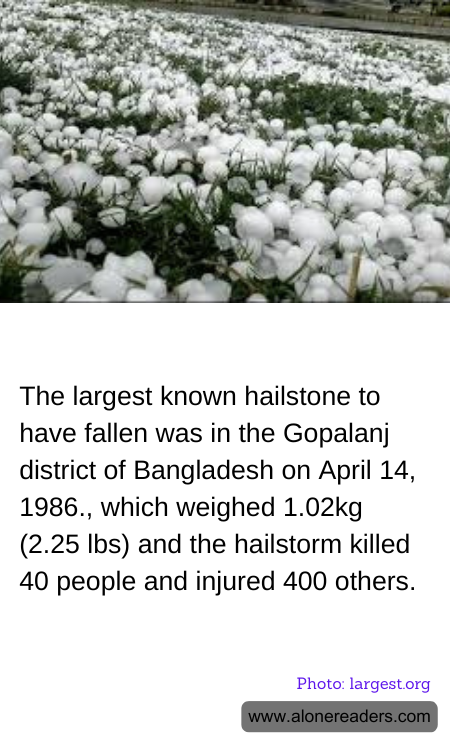
On April 14, 1986, the Gopalanj district of Bangladesh witnessed a weather phenomenon that would etch its name in the annals of meteorological history. On that fateful day, the largest known hailstone ever recorded fell from the sky, weighing an astonishing 1.02 kilograms (2.25 pounds). This extraordinary event was not just a marvel of nature but also a stark reminder of the destructive power that weather can wield.
Hailstones are formed when updrafts in thunderstorms carry raindrops into extremely cold areas of the atmosphere, where they freeze. As these frozen droplets are carried through the storm, they collide with additional water droplets, which freeze upon contact, causing the hailstone to grow. The process continues until the hailstone becomes too heavy for the updrafts to support, and it falls to the ground. While hailstones are not uncommon, the sheer size of the one that fell in Gopalanj was unprecedented.
The hailstorm that accompanied this massive hailstone was devastating. It claimed the lives of 40 people and left 400 others injured. The destruction extended beyond human casualties, as homes, crops, and livestock were also severely affected. The impact on the local community was profound, with many families losing their livelihoods in the blink of an eye. The storm served as a harsh reminder of the vulnerability of human settlements to the whims of nature.
In the aftermath of the storm, efforts were made to understand how such a large hailstone could form. Meteorologists studied the atmospheric conditions that led to the storm, hoping to glean insights that could help predict and mitigate the effects of similar events in the future. The Gopalanj hailstone became a subject of scientific inquiry, contributing to the broader understanding of severe weather phenomena.
The event also highlighted the importance of preparedness and resilience in the face of natural disasters. While it is impossible to prevent such occurrences, communities can take steps to minimize their impact. Improved weather forecasting, early warning systems, and community education are crucial in reducing the loss of life and property during severe weather events.
The Gopalanj hailstone remains a testament to the extraordinary forces of nature. It serves as a reminder of the need for continued research and preparedness to protect communities from the unpredictable and often destructive power of the weather. As we reflect on this remarkable event, it is essential to remember the lives lost and the resilience of those who survived, as well as the ongoing efforts to better understand and respond to the challenges posed by our ever-changing climate.