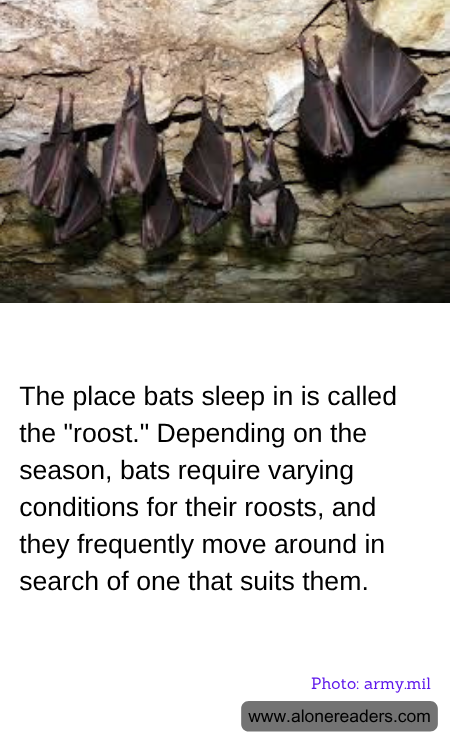
Bats, the only mammals capable of sustained flight, are fascinating creatures that play crucial roles in ecosystems around the world. One of the lesser-known aspects of their lives is their roosting behavior. The place where bats sleep is known as a "roost," and these roosts are essential for their survival. Depending on the season, bats require different conditions for their roosts, and they often move around to find a suitable one.
During the warmer months, bats typically seek out roosts that provide warmth and safety for raising their young. These summer roosts can be found in a variety of locations, including tree cavities, caves, and even man-made structures like attics and barns. The warmth of these roosts is crucial for the development of bat pups, as it helps them grow quickly and prepares them for the challenges of flight and foraging. In these summer roosts, bats often form maternity colonies, where females gather to give birth and care for their young collectively.
As the seasons change and temperatures drop, bats face the challenge of finding suitable winter roosts. Many species of bats hibernate during the winter months, entering a state of torpor to conserve energy when food is scarce. For hibernation, bats require roosts that offer stable, cool temperatures and high humidity levels. Caves and abandoned mines are common winter roosts, providing the necessary conditions for bats to survive the cold months. Some species, however, migrate to warmer climates to avoid the harsh winter altogether.
The need to find appropriate roosts throughout the year means that bats are constantly on the move. This mobility is crucial for their survival, as it allows them to adapt to changing environmental conditions and avoid predators. However, it also makes them vulnerable to habitat loss and human disturbances. As natural roosting sites become scarce due to deforestation and urban development, bats increasingly rely on human-made structures, which can sometimes lead to conflicts with people.
Conservation efforts are vital to ensure that bats have access to suitable roosting sites. Protecting natural habitats, such as forests and caves, is essential for maintaining healthy bat populations. Additionally, creating bat-friendly environments in urban areas, such as installing bat boxes, can provide alternative roosting options and help mitigate the impact of habitat loss.
Understanding the roosting behavior of bats is key to appreciating their ecological importance and the challenges they face. By ensuring that bats have access to suitable roosts throughout the year, we can help preserve these remarkable creatures and the vital roles they play in our ecosystems. Whether it's controlling insect populations or pollinating plants, bats are indispensable to the health of our environment, and their roosting needs deserve our attention and protection.
