More About This Card
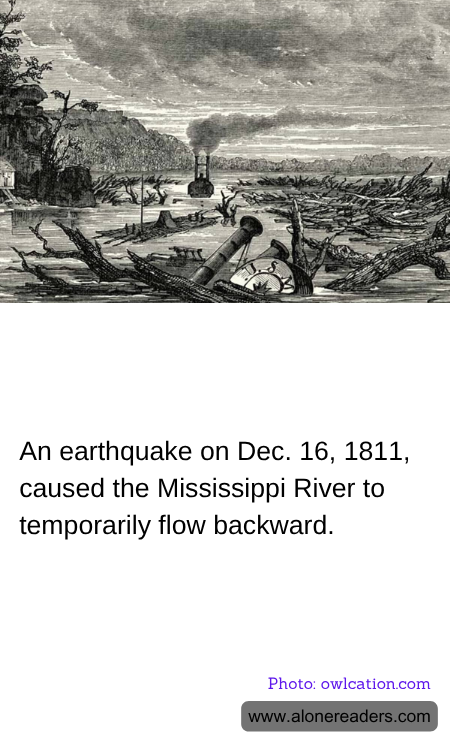
On December 16, 1811, a powerful earthquake struck the central United States, forever altering the landscape and leaving a lasting impression on the region's history. This seismic event, part of a series of earthquakes known as the New Madrid earthquakes, was so intense that it caused the mighty Mississippi River to temporarily flow backward. This phenomenon, both awe-inspiring and terrifying, remains one of the most remarkable natural events in American history.
The New Madrid earthquakes, named after the town of New Madrid in present-day Missouri, were among the most powerful earthquakes to hit the contiguous United States. The initial quake on December 16, 1811, was followed by a series of aftershocks and additional major quakes that continued into the following year. These earthquakes were estimated to have magnitudes ranging from 7.0 to 8.0, making them some of the strongest ever recorded in North America.
The Mississippi River, a crucial waterway for transportation and trade, was dramatically affected by the seismic activity. The force of the earthquake caused the river to flow backward for several hours, a phenomenon that was both a testament to the earthquake's power and a source of astonishment for those who witnessed it. This reversal of flow was due to the uplift of the riverbed and the creation of temporary waterfalls as the land shifted violently. The event was so significant that it was documented by numerous eyewitnesses, including Native Americans, European settlers, and riverboat crews.
The impact of the earthquakes extended beyond the temporary reversal of the Mississippi River. The tremors caused widespread destruction across the region, toppling buildings, creating fissures in the ground, and forming new lakes and swamps. The town of New Madrid was particularly hard hit, with many structures reduced to rubble. The quakes were felt as far away as the East Coast, with reports of shaking from cities like Washington, D.C., and Charleston, South Carolina.
In the aftermath of the earthquakes, the landscape of the central United States was permanently altered. The seismic activity led to the creation of Reelfoot Lake in Tennessee, formed when the ground sank and filled with water. The earthquakes also heightened awareness of the potential for seismic activity in the region, which lies along the New Madrid Seismic Zone, a fault line that remains active to this day.
The story of the Mississippi River flowing backward serves as a powerful reminder of the Earth's dynamic nature and the forces that shape our world. It highlights the unpredictability of natural disasters and the resilience of the communities that endure them. As we reflect on this historic event, we are reminded of the importance of preparedness and the need to respect the natural forces that continue to influence our lives.