More About This Card
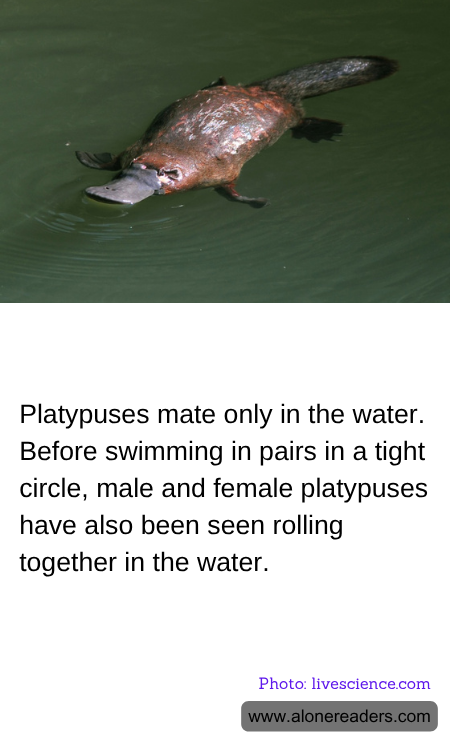
The platypus, one of nature's most intriguing creatures, continues to captivate scientists and animal enthusiasts alike with its unique behaviors and characteristics. Among the many fascinating aspects of this monotreme's life is its mating ritual, which takes place exclusively in the water. This aquatic courtship is a delicate dance of synchronization and connection, showcasing the platypus's adaptability and the intricacies of its reproductive habits.
Platypuses are solitary animals for most of the year, but during the breeding season, which typically occurs between June and October in Australia, they engage in a complex mating ritual. The process begins with the male and female platypuses swimming together in a tight circle. This synchronized swimming is not just a prelude to mating but also a crucial part of their courtship. The circular motion allows the pair to establish a bond and communicate their readiness to mate. This behavior is a testament to the platypus's reliance on water not only for survival but also for reproduction.
In addition to swimming in circles, male and female platypuses have been observed rolling together in the water. This rolling behavior is believed to be another form of courtship, allowing the pair to become more familiar with each other. The rolling and circling are gentle and deliberate, indicating a mutual understanding and cooperation between the two animals. These actions are essential for the successful mating of platypuses, as they help to ensure that both parties are comfortable and willing to proceed.
The aquatic environment plays a crucial role in the mating process of platypuses. Water provides a medium that supports their unique physical attributes, such as their webbed feet and streamlined bodies, which are perfectly adapted for swimming. The buoyancy of water also facilitates the intricate movements involved in their courtship rituals, making it an ideal setting for these semi-aquatic mammals to engage in their mating dance.
Understanding the mating behaviors of platypuses offers valuable insights into their biology and ecology. It highlights the importance of preserving their natural habitats, as any disruption to their aquatic environments could have significant impacts on their reproductive success. Conservation efforts are crucial to ensure that these remarkable creatures continue to thrive in the wild.
In conclusion, the mating rituals of platypuses are a remarkable display of nature's complexity and beauty. Their exclusive reliance on water for mating underscores the importance of aquatic environments in their life cycle. As we continue to study and learn more about these enigmatic animals, we gain a deeper appreciation for the delicate balance of ecosystems and the need to protect the habitats that sustain such unique species.