More About This Card
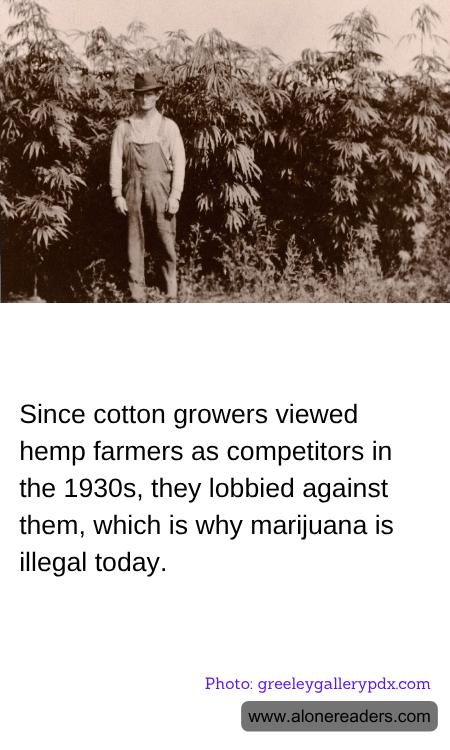
In the 1930s, the United States was a nation grappling with economic challenges and shifting agricultural landscapes. During this time, an intriguing rivalry emerged between cotton growers and hemp farmers, a rivalry that would have lasting implications on the legality of marijuana. Cotton, a staple of the American agricultural economy, was facing competition from hemp, a versatile crop known for its strong fibers and myriad uses. This competition led to a concerted effort by cotton growers to undermine the hemp industry, a campaign that played a significant role in the eventual criminalization of marijuana.
Hemp, a variety of the Cannabis sativa plant species, was historically used for producing rope, textiles, and paper. Its fibers were strong and durable, making it a valuable crop. However, as the 20th century progressed, the cotton industry, which had been a dominant force in American agriculture, began to view hemp as a threat. Cotton growers, concerned about losing market share to hemp, lobbied aggressively against it. They capitalized on the growing anti-marijuana sentiment, which was fueled by sensationalist media portrayals and racial prejudices, to conflate hemp with marijuana, despite their differences.
The campaign against hemp was not solely about economics; it was also about perception. By associating hemp with marijuana, cotton growers and their allies were able to tap into the fears and misconceptions surrounding cannabis. This strategy was effective in swaying public opinion and influencing policymakers. The result was the Marihuana Tax Act of 1937, which imposed strict regulations and taxes on the cultivation of cannabis, including hemp. This legislation effectively crippled the hemp industry and paved the way for the broader criminalization of marijuana.
The impact of this lobbying effort was profound. By the mid-20th century, marijuana was classified as a Schedule I drug under the Controlled Substances Act of 1970, placing it alongside substances deemed to have a high potential for abuse and no accepted medical use. This classification has persisted, despite growing evidence of marijuana's medicinal benefits and the resurgence of hemp as a sustainable crop.
Today, as attitudes towards cannabis continue to evolve, it is important to understand the historical context that led to its prohibition. The rivalry between cotton and hemp in the 1930s serves as a reminder of how economic interests and misinformation can shape public policy in ways that have lasting consequences. As the legal landscape surrounding cannabis changes, revisiting this history offers valuable insights into the complex interplay between industry, politics, and public perception.