More About This Card
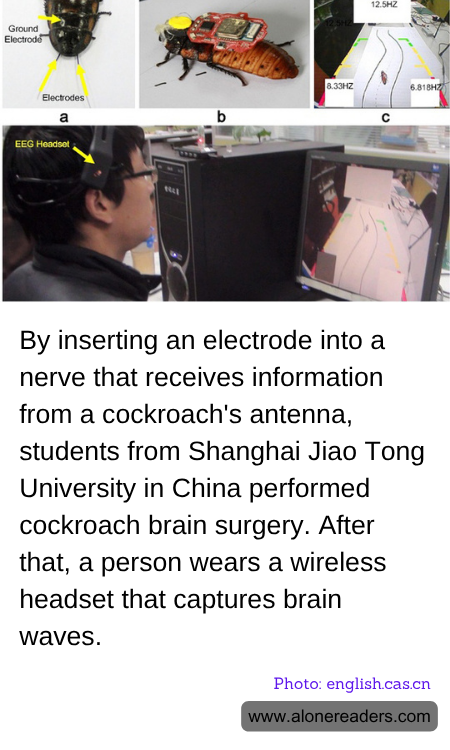
In a groundbreaking experiment that bridges the realms of biology and technology, students from Shanghai Jiao Tong University in China have successfully performed a unique form of surgery on a cockroach. By inserting an electrode into a nerve that receives information from the insect's antenna, these innovative students have opened new avenues for understanding neural communication and control. This experiment is not just a testament to human ingenuity but also a glimpse into the potential future of bioengineering and neurotechnology.
The procedure involved delicate and precise work, as the students carefully implanted an electrode into the cockroach's nervous system. This electrode was strategically placed to intercept signals from the antenna, which is a primary sensory organ for the insect. The antennae of cockroaches are highly sensitive and play a crucial role in their ability to navigate and respond to their environment. By tapping into this nerve, the students were able to gain insights into how sensory information is processed and transmitted within the cockroach's brain.
What makes this experiment even more fascinating is the integration of human brainwave technology. After the electrode was successfully implanted, a person wearing a wireless headset was able to capture and interpret brain waves. This headset, designed to read and analyze neural activity, allowed the human participant to interact with the cockroach in a novel way. The brain waves captured by the headset were used to send signals to the electrode, effectively creating a communication link between human and insect.
This innovative approach has profound implications for the future of neuroscience and bioengineering. By demonstrating that human brainwaves can influence the behavior of an insect, the students have paved the way for further exploration into brain-machine interfaces. Such technology could one day lead to advancements in prosthetics, allowing for more intuitive control of artificial limbs, or even the development of new methods for treating neurological disorders.
Moreover, this experiment highlights the potential for educational institutions to foster creativity and innovation among students. By encouraging hands-on experimentation and interdisciplinary collaboration, universities can play a pivotal role in advancing scientific knowledge and technological development. The work done by the students at Shanghai Jiao Tong University serves as an inspiring example of what can be achieved when young minds are given the tools and freedom to explore the unknown.
While the ethical considerations of such experiments must be carefully weighed, the potential benefits of this research are undeniable. As we continue to explore the intricate connections between biology and technology, the possibilities for enhancing human capabilities and understanding the natural world are virtually limitless. This experiment with the cockroach is just the beginning of what promises to be an exciting journey into the future of science and innovation.