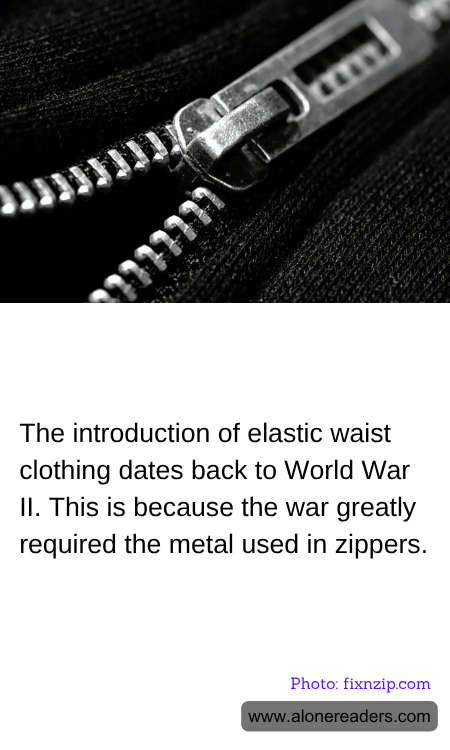
The introduction of elastic waist clothing is a fascinating chapter in the history of fashion, deeply intertwined with the socio-economic conditions of World War II. During this tumultuous period, the global demand for resources was unprecedented, as nations prioritized materials for military use. Among these materials was metal, a critical component for manufacturing zippers. As a result, the fashion industry had to innovate and adapt, leading to the widespread adoption of elastic waistbands in clothing.
Before the war, zippers were a popular fastening method in garments, offering a sleek and modern alternative to buttons and hooks. However, as the war effort intensified, metal became a precious commodity, redirected towards the production of weapons, vehicles, and other essential military equipment. This scarcity prompted designers and manufacturers to seek alternatives that would conserve metal yet maintain functionality and comfort in clothing.
The solution came in the form of elastic waistbands, which were not entirely new but had not been widely used in mainstream fashion. Elastic, made from rubber and fabric, offered a flexible and comfortable fit without the need for metal fasteners. This innovation was particularly beneficial for everyday wear, as it provided ease of movement and adaptability to different body shapes, making it an instant favorite among consumers.
The shift to elastic waist clothing was not just a practical response to material shortages but also a reflection of changing societal norms. As women entered the workforce in unprecedented numbers to support the war effort, there was a growing need for practical, comfortable clothing that could accommodate long hours and physical activity. Elastic waistbands met these needs perfectly, offering a level of comfort and convenience that traditional fasteners could not match.
Post-war, the popularity of elastic waist clothing continued to grow, becoming a staple in wardrobes around the world. The practicality and comfort of elastic waistbands resonated with consumers, and they became a symbol of the democratization of fashion, making stylish and functional clothing accessible to a broader audience. This innovation paved the way for the development of various casual and sportswear lines, which remain popular to this day.
In conclusion, the introduction of elastic waist clothing during World War II was a pivotal moment in fashion history. It was a testament to human ingenuity and adaptability in the face of adversity, transforming a wartime necessity into a lasting trend. Today, elastic waistbands are ubiquitous, found in everything from casual wear to high fashion, a lasting legacy of a time when the world came together to overcome challenges and innovate for the future.
