More About This Card
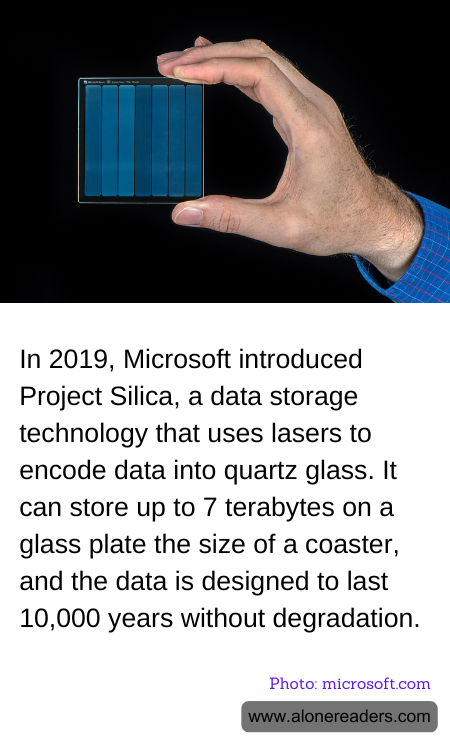
In 2019, Microsoft unveiled an innovative leap in data storage technology with the introduction of Project Silica. This groundbreaking project harnesses the power of lasers to encode data into quartz glass, offering a futuristic solution to the ever-growing challenge of data preservation. At the heart of Project Silica is a remarkable ability to store up to 7 terabytes of data on a glass plate no larger than a standard coaster. This advancement not only promises to revolutionize data storage but also ensures the longevity of the information, with a design life of up to 10,000 years without degradation.
The technology behind Project Silica is as fascinating as it is complex. By using ultrafast lasers, data is encoded in the form of tiny 3D nanoscale gratings and deformations within the glass. These structures can then be read back using machine learning algorithms that decode the patterns. This method of storage is not only durable but also highly resilient to environmental factors that typically threaten traditional storage media. Unlike conventional hard drives or magnetic tapes, quartz glass is impervious to water, electromagnetic pulses, and extreme temperatures, making it an ideal medium for long-term data preservation.
The implications of Project Silica are vast and varied. In an era where digital data is growing exponentially, the need for reliable and sustainable storage solutions is more critical than ever. Traditional storage methods are often plagued by issues of longevity and environmental susceptibility, leading to frequent data migrations and increased costs. Project Silica offers a promising alternative, potentially reducing the need for constant data transfers and the associated energy consumption. This could have significant environmental benefits, aligning with global efforts to reduce carbon footprints and promote sustainable technology practices.
Moreover, the potential applications of Project Silica extend beyond mere data storage. Its durability and longevity make it an attractive option for archiving culturally and historically significant information. Imagine preserving the world's most important documents, artworks, and scientific data for future generations without the fear of loss or degradation. This could transform how we think about data preservation, ensuring that our digital heritage remains intact for millennia.
As Microsoft continues to refine and develop Project Silica, the technology stands as a testament to human ingenuity and the relentless pursuit of innovation. It challenges the boundaries of what is possible in data storage and preservation, offering a glimpse into a future where information is not only abundant but also eternal. For individuals and organizations alike, Project Silica represents a beacon of hope in the quest for sustainable and reliable data solutions, promising to safeguard the digital treasures of today for the world of tomorrow.