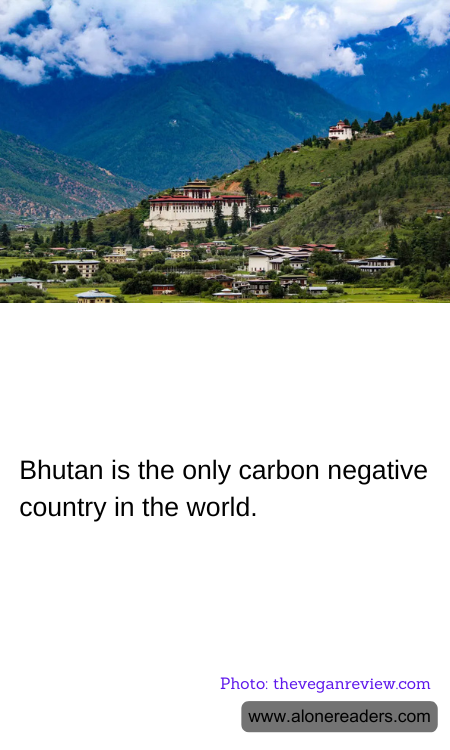
Nestled in the eastern Himalayas, Bhutan is a small kingdom that has captured global attention for its remarkable environmental achievement: it is the only carbon-negative country in the world. This means that Bhutan absorbs more carbon dioxide than it emits, a feat that stands as a beacon of hope and inspiration in the fight against climate change.
Bhutan's commitment to environmental conservation is deeply rooted in its cultural and spiritual values. The country's development philosophy, Gross National Happiness (GNH), prioritizes the well-being of its citizens and the health of the environment over mere economic growth. This unique approach has guided Bhutan's policies and practices, ensuring that sustainability is at the heart of its national agenda.
One of the key factors contributing to Bhutan's carbon-negative status is its extensive forest cover. Approximately 72% of the country is blanketed in forests, which act as natural carbon sinks, absorbing vast amounts of carbon dioxide from the atmosphere. The Bhutanese government has enshrined in its constitution that a minimum of 60% of the country's land must remain forested for all time, a testament to its long-term commitment to environmental preservation.
In addition to its forest conservation efforts, Bhutan has made significant strides in renewable energy. The country harnesses its abundant hydropower resources, generating clean electricity that not only meets domestic needs but is also exported to neighboring countries like India. This reliance on renewable energy sources significantly reduces Bhutan's carbon footprint and contributes to its carbon-negative status.
Bhutan's government also actively promotes sustainable agriculture and waste management practices. By encouraging organic farming and reducing the use of chemical fertilizers, Bhutan minimizes the environmental impact of its agricultural sector. Furthermore, the country has implemented waste management initiatives that focus on recycling and reducing waste, further contributing to its environmental goals.
The success of Bhutan's environmental policies is not only a result of government action but also the active participation of its citizens. Bhutanese people are deeply connected to their natural surroundings and play a crucial role in conservation efforts. Community-based initiatives and education programs have empowered citizens to take part in preserving their environment, fostering a collective sense of responsibility and stewardship.
Bhutan's achievement as a carbon-negative country serves as a powerful example for the rest of the world. It demonstrates that with the right policies, commitment, and community involvement, it is possible to balance development with environmental sustainability. As the global community grapples with the challenges of climate change, Bhutan's story offers valuable lessons and hope for a sustainable future.
