More About This Card
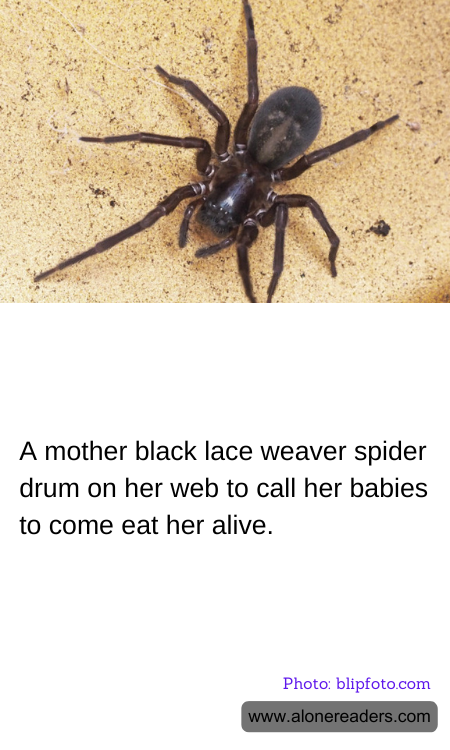
In the intricate world of arachnids, the black lace-weaver spider (Amaurobius ferox) presents a fascinating and somewhat macabre example of maternal sacrifice. This small, unassuming spider, native to Europe but now found in various parts of the world, engages in a unique behavior that underscores the complex dynamics of survival and reproduction in the animal kingdom.
The life cycle of the black lace-weaver spider is marked by a remarkable act of selflessness. After laying her eggs, the mother spider remains vigilant, guarding her offspring with unwavering dedication. As the spiderlings hatch, they are entirely dependent on their mother for sustenance. In a striking display of maternal care, the mother begins a rhythmic drumming on her web, a signal that calls her young to her. This drumming is not merely a call to gather but an invitation to partake in a final, sacrificial meal.
The mother spider's drumming is a prelude to matriphagy, a process where the offspring consume their mother. This act of self-sacrifice ensures that the spiderlings receive the necessary nutrients to thrive in their early stages of life. The mother's body provides a rich source of nourishment, packed with proteins and other vital nutrients that are crucial for the development of the young spiders. Through this ultimate sacrifice, the mother ensures the survival and future success of her progeny.
While this behavior may seem brutal from a human perspective, it is a testament to the intricate balance of nature and the lengths to which species will go to ensure their survival. The black lace-weaver's sacrifice is a poignant reminder of the diverse strategies employed by different species to adapt and thrive in their environments. It highlights the complex interplay between life and death, where the end of one life fuels the beginning of many others.
This extraordinary behavior also offers valuable insights for scientists studying evolutionary biology and animal behavior. It raises intriguing questions about the evolutionary advantages of such extreme parental investment and the ecological factors that drive these behaviors. Understanding the black lace-weaver's life cycle provides a window into the broader mechanisms of evolution and adaptation that shape the natural world.
For those who encounter the black lace-weaver spider, this knowledge adds a layer of appreciation for the hidden dramas unfolding in the corners of our homes and gardens. It serves as a reminder of the remarkable diversity of life and the myriad ways in which species navigate the challenges of existence. The story of the black lace-weaver spider is a testament to the resilience and ingenuity of life, a narrative of sacrifice and survival that resonates across the tapestry of nature.