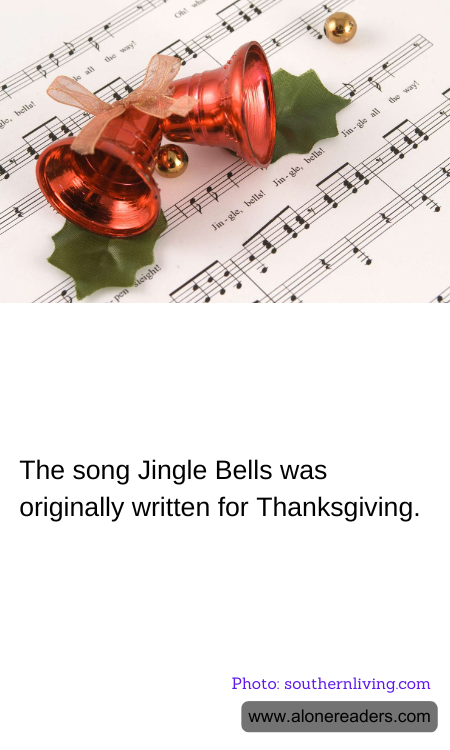
The song "Jingle Bells" is one of the most iconic and enduring holiday tunes, instantly recognizable from its first few notes. While it is now synonymous with Christmas, few people realize that it was originally written for a different holiday altogether—Thanksgiving. This surprising fact adds an intriguing layer to the history of a song that has become a staple of festive celebrations around the world.
"Jingle Bells" was composed by James Lord Pierpont in 1857. Originally titled "The One Horse Open Sleigh," the song was intended to capture the lively spirit of winter fun and was first performed at a Thanksgiving church service in Savannah, Georgia. The song's imagery of dashing through the snow in a one-horse open sleigh was meant to evoke the joy and excitement of winter activities that were common during the Thanksgiving season in the 19th century. At that time, Thanksgiving was a much more prominent holiday in the United States, and winter festivities often began with it.
The transition of "Jingle Bells" from a Thanksgiving song to a Christmas classic is not entirely clear, but it likely happened gradually as the song gained popularity. The catchy melody and cheerful lyrics made it a favorite for holiday gatherings, and as Christmas became more commercialized and widely celebrated, "Jingle Bells" naturally found its place in the Christmas repertoire. Its themes of snow and sleigh rides fit seamlessly into the imagery of a traditional Christmas, making it a perfect match for the holiday season.
Despite its original association with Thanksgiving, "Jingle Bells" has become an integral part of Christmas culture. It has been covered by countless artists across various genres, from Bing Crosby and Frank Sinatra to the likes of Michael Bublé and even the Muppets. Its universal appeal and timeless charm ensure that it remains a beloved song for people of all ages, bringing joy and a sense of nostalgia to holiday celebrations.
The story of "Jingle Bells" serves as a reminder of how traditions can evolve over time, adapting to new contexts and meanings. While it may have started as a tribute to Thanksgiving merriment, its enduring legacy as a Christmas classic highlights the fluid nature of cultural customs. As we sing along to "Jingle Bells" each holiday season, we are participating in a tradition that has been shaped by history, bringing together the past and present in a joyful celebration of winter's delights.
