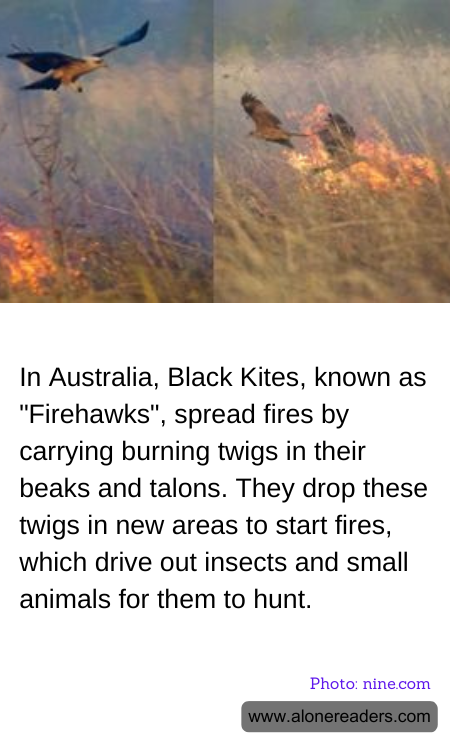
In the vast and diverse landscapes of Australia, a fascinating and somewhat unsettling phenomenon unfolds, showcasing the remarkable adaptability and intelligence of certain bird species. Among these avian wonders are the Black Kites, often referred to as "Firehawks" due to their unique and somewhat controversial behavior. These birds have developed a strategy that involves spreading fires by carrying burning twigs in their beaks and talons, a practice that has intrigued scientists and locals alike.
Black Kites are medium-sized birds of prey, easily recognizable by their forked tails and graceful flight. They are widespread across Australia, thriving in a variety of habitats from open woodlands to urban areas. What sets them apart from other birds, however, is their extraordinary relationship with fire. Observations and indigenous knowledge have long suggested that these birds intentionally spread fires, a behavior that has been documented in several regions across the continent.
The process begins when a fire breaks out, whether naturally or through human intervention. Black Kites are drawn to the smoke and flames, where they engage in an opportunistic feeding strategy. They pick up burning twigs and embers with their beaks or talons and transport them to unburned areas. Once there, they drop these incendiary materials, igniting new fires. This behavior is not random; it serves a specific purpose. By starting new fires, the kites flush out insects, small mammals, and reptiles from their hiding places, making them easy prey for the birds.
This fire-spreading behavior is not only a testament to the intelligence of Black Kites but also highlights the complex interactions between wildlife and their environment. It challenges our understanding of fire ecology and the role of animals in shaping their habitats. While fire is often seen as a destructive force, in the hands—or rather, beaks—of these birds, it becomes a tool for survival.
The implications of this behavior are significant, especially in a country like Australia, where bushfires are a natural and frequent occurrence. Understanding the role of Black Kites in fire dynamics could provide valuable insights into fire management and conservation strategies. It also raises questions about the ethical considerations of wildlife behavior and the balance between natural instincts and human intervention.
For many indigenous communities, the concept of "Firehawks" is not new. Traditional knowledge has long recognized the role of these birds in fire management, viewing them as both allies and challenges in the delicate balance of the ecosystem. This ancient wisdom, combined with modern scientific research, offers a comprehensive understanding of the intricate relationships between fire, wildlife, and the environment.
In conclusion, the Black Kites of Australia, with their fire-spreading antics, serve as a reminder of the incredible adaptability of nature. Their behavior, while seemingly destructive, is a sophisticated survival strategy that underscores the complexity of ecological interactions. As we continue to study these remarkable birds, they offer valuable lessons in resilience, adaptation, and the ever-evolving dance between life and the elements.
