More About This Card
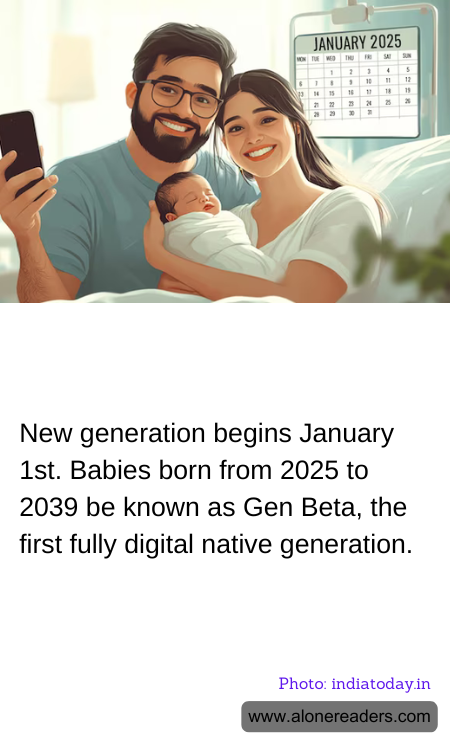
As the clock strikes midnight on January 1st, 2025, the world will welcome not just a new year, but the dawn of a new generation. This cohort, known as Generation Beta, will encompass those born from 2025 to 2039. They are set to become the first fully digital native generation, growing up in a world where technology is seamlessly integrated into every aspect of life.
Generation Beta will be born into an era where digital technology is not just a tool but an intrinsic part of the human experience. Unlike their predecessors, who witnessed the gradual evolution of technology, Gen Beta will enter a world where smart devices, artificial intelligence, and virtual reality are as commonplace as electricity and running water. This generation will likely never know a world without the Internet of Things, where everyday objects are interconnected and responsive to human needs.
The implications of being the first fully digital native generation are profound. Education, for instance, will be transformed by technology in ways that are only beginning to be imagined. Virtual classrooms, AI-driven personalized learning experiences, and digital textbooks will be the norm. This generation will have unprecedented access to information and learning resources, potentially leveling the educational playing field across different socio-economic backgrounds.
Social interactions for Gen Beta will also be shaped by digital advancements. While previous generations have adapted to social media and online communication, Gen Beta will navigate these platforms with an innate understanding. Their social lives will be a blend of physical and virtual interactions, with friendships and communities extending beyond geographical boundaries. This could foster a more global perspective, as cultural exchanges become more frequent and accessible.
However, the rise of Generation Beta also brings challenges. The digital world, while offering vast opportunities, also presents risks such as data privacy concerns, cyberbullying, and the potential for digital addiction. As this generation grows, there will be a pressing need for robust digital literacy education to equip them with the skills to navigate these challenges safely and responsibly.
Moreover, the workforce that Gen Beta will enter will be vastly different from today's. Automation and AI are expected to redefine job roles, requiring a workforce that is adaptable and skilled in technology. Gen Beta will need to be lifelong learners, continuously updating their skills to keep pace with technological advancements.
In conclusion, Generation Beta represents a new chapter in human history, one where the digital and physical worlds are intricately intertwined. As they grow, they will shape and be shaped by the digital landscape, bringing with them new ideas, innovations, and ways of living. The world awaits with anticipation to see how this generation will harness the power of technology to create a future that is both exciting and challenging.