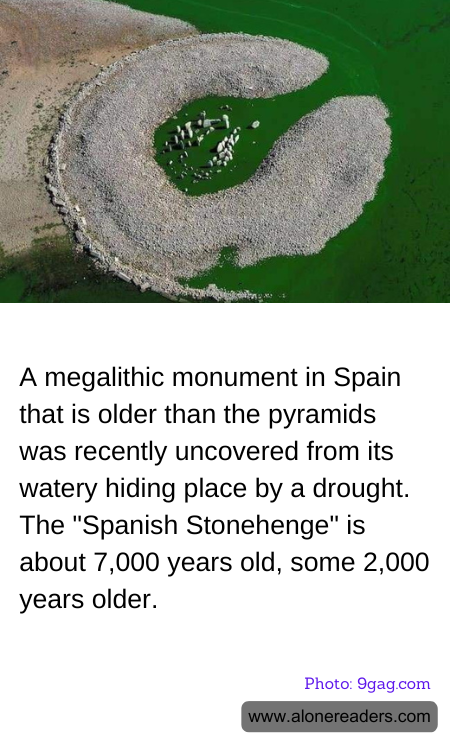
In a remarkable turn of events, a severe drought in Spain has unveiled a hidden treasure from the depths of history. The "Spanish Stonehenge," a megalithic monument submerged for decades, has emerged from its watery concealment, offering a rare glimpse into a prehistoric past that predates even the Egyptian pyramids. This ancient site, known as the Dolmen of Guadalperal, is estimated to be around 7,000 years old, making it approximately 2,000 years older than the iconic pyramids of Giza.
Located in the province of Cáceres in western Spain, the Dolmen of Guadalperal was originally discovered in the 1920s by German archaeologist Hugo Obermaier. However, it was submerged in 1963 due to the construction of the Valdecañas Reservoir, which flooded the area. Since then, the monument has only been visible during periods of extreme drought, when the water levels recede enough to reveal its ancient stones.
The site consists of a large circle of granite stones, some standing as tall as six feet, arranged in a manner reminiscent of the famous Stonehenge in England. These stones are believed to have been used for ceremonial or religious purposes by the prehistoric communities that inhabited the region. The monument's age and design suggest it played a significant role in the cultural and spiritual lives of these early inhabitants.
The recent re-emergence of the Dolmen of Guadalperal has sparked renewed interest among archaeologists and historians, eager to study the site and uncover more about the people who built it. The monument's age and construction provide valuable insights into the technological and social advancements of prehistoric societies in the Iberian Peninsula. Researchers hope to learn more about the monument's purpose, the methods used in its construction, and the significance it held for the ancient communities.
The exposure of the "Spanish Stonehenge" also raises important questions about the impact of climate change on historical sites. As droughts become more frequent and severe, other submerged or hidden archaeological treasures may come to light, offering new opportunities for discovery and understanding. However, these conditions also pose a threat to the preservation of such sites, as exposure to the elements can lead to deterioration.
For now, the Dolmen of Guadalperal stands as a testament to the ingenuity and spiritual life of our ancestors, a silent witness to thousands of years of history. Its unexpected reappearance serves as a reminder of the rich and complex tapestry of human civilization, inviting us to explore and appreciate the mysteries of our past. As researchers continue to study this ancient monument, it promises to reveal more about the early inhabitants of the Iberian Peninsula and their place in the broader narrative of human history.
