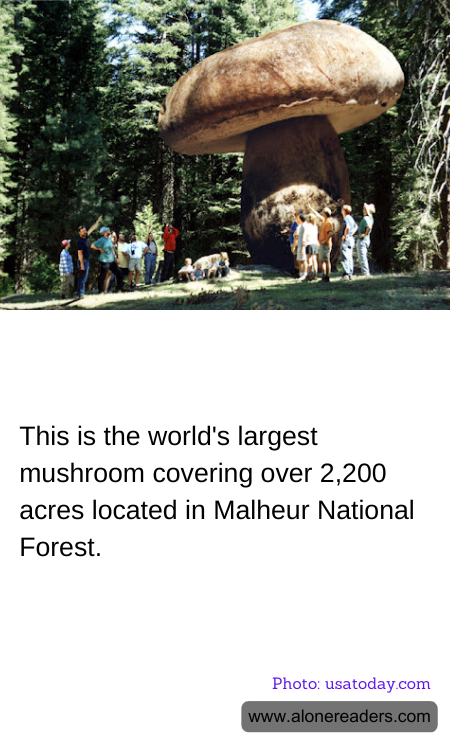
Nestled within the serene expanse of the Malheur National Forest in eastern Oregon lies a natural wonder that defies the typical image of a mushroom. This is not a quaint, umbrella-shaped fungus sprouting from the forest floor, but rather the world's largest living organism, a colossal honey fungus (Armillaria ostoyae) that stretches over an astonishing 2,200 acres. This subterranean giant, often referred to as the "Humongous Fungus," is a testament to the incredible scale and complexity of nature's hidden networks.
Discovered in 1998, this fungal marvel has captured the imagination of scientists and nature enthusiasts alike. The honey fungus is primarily known for its extensive underground mycelial network, which is the vegetative part of the fungus. This network consists of a vast web of thread-like structures that spread beneath the forest floor, connecting with tree roots and other organic matter. While the visible fruiting bodies, or mushrooms, may appear seasonally on the surface, it is the mycelium that constitutes the bulk of this organism's mass and reach.
The sheer size of the Armillaria ostoyae in Malheur National Forest is staggering. It is estimated to be around 2,500 years old, making it not only the largest but also one of the oldest living organisms on Earth. This ancient organism thrives by colonizing and decomposing the roots of trees, which can lead to the death of its host. While this might sound detrimental, the honey fungus plays a crucial role in the forest ecosystem by recycling nutrients and facilitating new growth.
The discovery of this massive fungus has sparked interest in the scientific community, prompting further research into the ecological impact and evolutionary history of such organisms. It challenges our understanding of what constitutes an individual organism, as the honey fungus blurs the lines between singularity and collective existence. Its ability to spread so extensively without being easily detected highlights the complexity and resilience of fungal life forms.
For visitors to the Malheur National Forest, the presence of the world's largest mushroom adds an element of mystery and wonder to the landscape. While the mycelium itself is hidden from view, the knowledge of its existence beneath the forest floor enriches the experience of exploring this natural habitat. It serves as a reminder of the intricate and often unseen connections that sustain life on our planet.
In a world where the extraordinary often goes unnoticed, the Humongous Fungus stands as a symbol of nature's boundless creativity and adaptability. As we continue to explore and understand the natural world, this colossal organism invites us to appreciate the hidden wonders that lie beneath our feet, waiting to be discovered and cherished.
