More About This Card
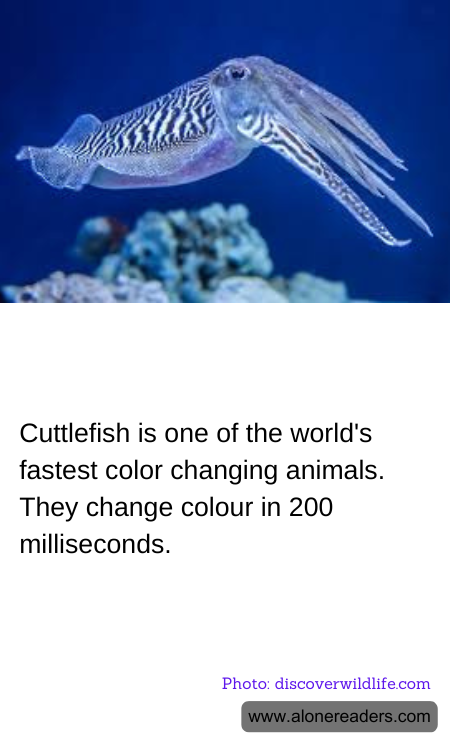
In the vibrant tapestry of the ocean's depths, few creatures captivate the imagination quite like the cuttlefish. Renowned for their remarkable ability to change color with astonishing speed, cuttlefish are among the fastest color-changing animals on the planet, capable of transforming their appearance in a mere 200 milliseconds. This extraordinary skill not only highlights the cuttlefish's unique place in the marine world but also underscores the intricate wonders of nature's design.
Cuttlefish belong to the cephalopod family, which also includes octopuses and squids. These intelligent mollusks possess a sophisticated nervous system and a complex set of skin cells known as chromatophores, iridophores, and leucophores. Chromatophores contain pigments that can expand or contract to alter the cuttlefish's color. Iridophores and leucophores, on the other hand, reflect light, adding iridescent and white hues to their palette. This combination allows cuttlefish to produce a dazzling array of colors and patterns, enabling them to blend seamlessly into their surroundings or communicate with other marine creatures.
The ability to change color so rapidly serves multiple purposes for the cuttlefish. Primarily, it acts as a highly effective camouflage mechanism, allowing them to evade predators and ambush prey. By mimicking the colors and textures of their environment, cuttlefish can virtually disappear against the backdrop of coral reefs, sandy ocean floors, or rocky seabeds. This skill is not only a testament to their survival instincts but also a fascinating example of evolutionary adaptation.
Beyond camouflage, cuttlefish use their color-changing prowess for communication and courtship. During mating rituals, males display vibrant patterns to attract females, while also warding off rival suitors. This visual language is crucial in the cuttlefish's social interactions, allowing them to convey intentions and emotions without uttering a sound. The rapid shifts in color and pattern can also serve as a warning signal to potential threats, showcasing the cuttlefish's ability to adapt its appearance to suit various situations.
The study of cuttlefish and their color-changing abilities has intrigued scientists for decades. Researchers continue to explore the underlying mechanisms that enable such rapid transformations, hoping to unlock secrets that could inspire advancements in technology and design. From adaptive camouflage materials to dynamic displays, the potential applications of this natural phenomenon are vast and varied.
In conclusion, the cuttlefish's ability to change color in just 200 milliseconds is a remarkable feat of nature, showcasing the intricate interplay between biology and environment. This swift transformation not only ensures their survival in the wild but also captivates the curiosity of humans, reminding us of the endless wonders that lie beneath the ocean's surface. As we continue to study and learn from these incredible creatures, the cuttlefish remains a symbol of nature's ingenuity and the boundless possibilities of adaptation.