More About This Card
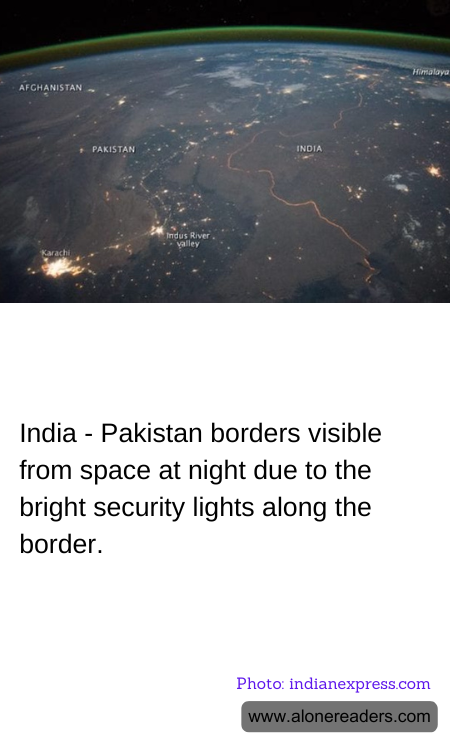
The India-Pakistan border, one of the most heavily militarized boundaries in the world, presents a striking spectacle when viewed from space at night. This remarkable visibility is due to the extensive network of security lights that line the border, creating a bright, illuminated line that stretches for miles. The lights serve a critical purpose, providing security and surveillance in a region that has been a flashpoint for conflict since the partition of British India in 1947.
The border, which runs for approximately 3,323 kilometers (about 2,065 miles), is illuminated by thousands of floodlights installed by the Indian government. These lights are part of a comprehensive security strategy aimed at preventing illegal crossings and smuggling activities. The illumination is particularly prominent along the western border with Pakistan, where tensions have historically been high. The lights not only serve as a deterrent but also facilitate the work of security personnel who patrol the area around the clock.
From space, the border appears as a glowing ribbon of light, a testament to the technological and logistical efforts involved in maintaining security in this sensitive region. The sight is a stark reminder of the geopolitical realities that define the relationship between India and Pakistan. Despite the beauty of the illuminated border as seen from above, it underscores the ongoing challenges and complexities of maintaining peace and security between the two nations.
The visibility of the border from space has also captured the imagination of people worldwide, often featuring in satellite imagery shared by space agencies and media outlets. These images highlight the contrast between the densely populated and brightly lit areas of India and the relatively darker regions of Pakistan, offering a unique perspective on the socio-economic differences between the two countries.
While the illuminated border is a marvel of modern engineering, it also raises questions about the environmental and economic costs of such extensive lighting. The energy consumption required to maintain the lights is significant, and there are concerns about the impact on local wildlife and ecosystems. However, for the governments involved, the security benefits outweigh these concerns, as the lights play a crucial role in safeguarding national borders.
In conclusion, the India-Pakistan border's visibility from space is a powerful symbol of the enduring complexities of international relations in South Asia. It serves as a reminder of the ongoing efforts to maintain peace and security in a region marked by historical tensions. As technology continues to evolve, the border's illumination will likely remain a focal point of interest, reflecting both the challenges and achievements in managing one of the world's most contentious boundaries.