More About This Card
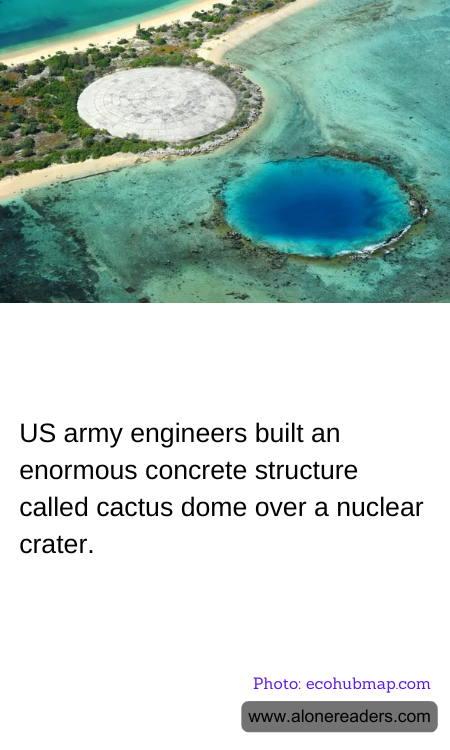
In the heart of the Pacific Ocean, on the remote Enewetak Atoll in the Marshall Islands, lies a stark reminder of the nuclear age: the Cactus Dome. This massive concrete structure, also known as the Runit Dome, was constructed by US Army engineers to contain radioactive debris from nuclear testing conducted during the Cold War era. The dome covers a crater left by one of the many nuclear detonations that took place in the region, serving as both a physical and symbolic barrier to the hazardous remnants of a bygone era.
The Cactus Dome was built in the late 1970s as part of a cleanup operation following the United States' extensive nuclear testing program in the Pacific. Between 1946 and 1958, the US conducted 67 nuclear tests in the Marshall Islands, with Enewetak Atoll being one of the primary sites. These tests left behind significant radioactive contamination, posing a long-term environmental and health risk to the local population and ecosystem. The dome was constructed over the Cactus Crater, which was created by a 1958 nuclear test code-named "Cactus."
The construction of the dome was a monumental engineering feat. It involved the placement of over 100,000 cubic yards of radioactive soil and debris into the crater, which was then sealed with a concrete cap measuring approximately 18 inches thick and 350 feet in diameter. The project was completed in 1980, and the dome has since become a symbol of the nuclear legacy in the Pacific. While the structure was intended to be a temporary solution, it remains in place today, raising concerns about its long-term integrity and the potential for radioactive leakage.
Despite its imposing presence, the Cactus Dome is not without its vulnerabilities. The structure was built on a coral atoll, which is naturally porous and susceptible to rising sea levels and extreme weather events. Climate change poses a significant threat to the dome's stability, as rising ocean levels and increased storm activity could compromise its ability to contain the radioactive material. This has led to growing calls for international attention and action to address the potential risks associated with the dome's deterioration.
The Cactus Dome stands as a poignant reminder of the environmental and human costs of nuclear testing. It underscores the importance of addressing the legacies of past actions and the need for responsible stewardship of our planet's resources. As the world grapples with the challenges of climate change and environmental degradation, the story of the Cactus Dome serves as a cautionary tale about the long-term consequences of human activity and the importance of sustainable practices for future generations.