More About This Card
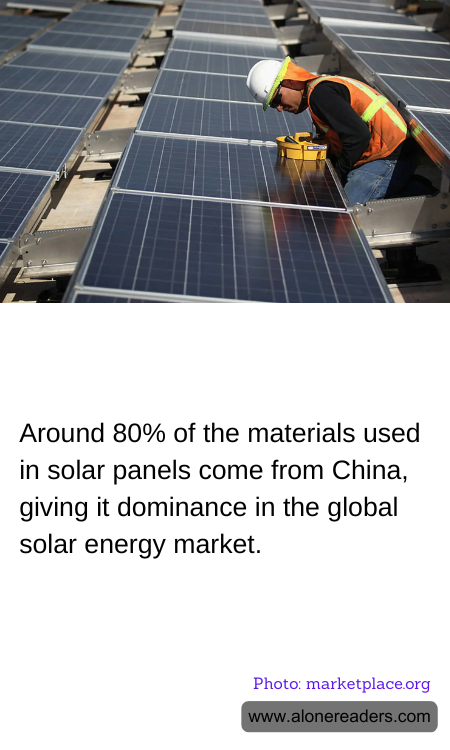
The global solar energy market has witnessed remarkable growth over the past decade, driven by increasing demand for renewable energy sources and the urgent need to combat climate change. At the heart of this burgeoning industry lies a significant dependency on China, which supplies approximately 80% of the materials used in solar panels worldwide. This dominance has positioned China as a pivotal player in the solar energy sector, influencing both market dynamics and global energy strategies.
China's ascendancy in the solar industry can be attributed to several factors. The country has invested heavily in the production of polysilicon, wafers, cells, and modules—key components in the manufacturing of solar panels. With its vast manufacturing capabilities and economies of scale, China has been able to produce these materials at a lower cost than many other countries. This cost advantage has made Chinese solar products highly competitive in the global market, enabling widespread adoption of solar technology across various regions.
Moreover, China's strategic investments in research and development have propelled technological advancements, enhancing the efficiency and performance of solar panels. By fostering innovation and maintaining a robust supply chain, China has not only secured its position as a leader in solar manufacturing but has also contributed to the reduction of solar energy costs worldwide. This has made solar power more accessible and affordable, accelerating the transition to renewable energy sources.
However, China's dominance in the solar industry also raises concerns about supply chain vulnerabilities and geopolitical dependencies. As countries strive to achieve energy independence and security, reliance on a single nation for critical materials poses potential risks. Disruptions in the supply chain, whether due to political tensions or natural disasters, could impact the availability and pricing of solar products globally. This has prompted some nations to explore strategies for diversifying their supply sources and investing in domestic solar manufacturing capabilities.
Efforts to reduce dependency on Chinese solar materials are gaining momentum. Several countries are implementing policies to encourage local production and innovation in the solar sector. By fostering a competitive environment and supporting emerging technologies, these nations aim to create a more balanced and resilient global solar market. Collaborative initiatives and international partnerships are also being explored to enhance supply chain security and promote sustainable energy solutions.
In conclusion, while China's dominance in the solar energy market has been instrumental in driving the global adoption of solar technology, it also underscores the need for diversification and resilience in the supply chain. As the world continues to embrace renewable energy, fostering a collaborative and competitive solar industry will be essential to ensuring a sustainable and secure energy future for all.